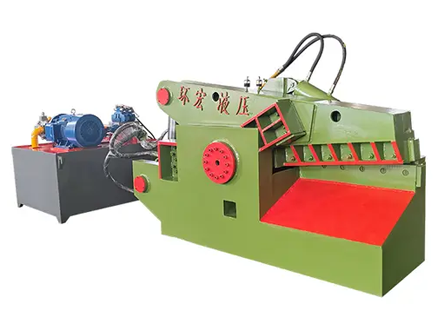
Scrap metal recycling follows seven clear steps: collection, sorting, processing, melting, purification, solidifying, and transportation. Each step turns discarded metal into valuable raw material, and at the heart of this efficient workflow is the modern Scrap Metal Recycling Plant.
You start by gathering scrap from different places. Next, you separate ferrous from non-ferrous metals. Processing breaks large pieces into smaller sizes—this is where a Scrap Metal Recycling Plant relies on heavy-duty hydraulic shears and balers to handle bulky materials like steel beams, car shells, and industrial scrap. Melting changes them into liquid form. Purification removes impurities. Solidifying shapes the clean metal. Finally, transportation delivers it to manufacturers.
Knowing this recycling process helps you get the most value from your scrap. The environmental benefit is huge. The Aluminum Association confirms that recycled aluminum uses only about 5% of the energy needed for new production.
Making recycled aluminum only takes around 5% of the energy needed to make new aluminum, which means a 95% energy saving.
The global scrap metal recycling market shows this value, expected to rise from $436.11 billion in 2025 to $722.65 billion by 2035. This article also covers preparation tips and the money-saving benefits of recycling—especially when your operation is supported by the right equipment in a Scrap Metal Recycling Plant.
Key Takeaways
Scrap metal recycling has seven steps: collection, sorting, processing, melting, purification, solidifying, and transportation.
Recycling aluminum uses 95% less energy than making new aluminum.
Sorting ferrous and non-ferrous metals the right way raises scrap value and quality.
Using shears and balers helps work get done faster and lowers the cost of moving materials.
Recycled metal works just as well as new metal, helping both the environment and business profits.
Scrap Metal Recycling Plant: Collection and Sorting
Every scrap metal recycling plant starts with two key jobs: collecting material and sorting it. You might think the work begins at the furnace, but the real setup happens long before metal gets hot. Knowing where scrap comes from and how to sort it well decides the quality of your final product and the money you can make.
Sources of Scrap Metal
Scrap metal comes to a recycling plant from many places. Industrial waste gives a steady supply of material. Factories create offcuts, shavings, and rejected parts during production. Construction sites provide steel beams, copper wiring, and aluminum fixtures when buildings get renovated or torn down. Household items add to the mix too. Old appliances, worn-out tools, and outdated electronics all hold valuable metals that deserve another use.
End-of-life vehicles are another big source. A typical car contains steel, aluminum, copper, and even small amounts of precious metals. When a vehicle reaches the end of its useful life, dismantlers remove usable parts, then send the remaining shell to a scrap metal recycling plant. This one source alone supplies millions of tons of recyclable material each year.
You should also think about commercial sources. Restaurants replace stainless steel equipment. Office buildings upgrade their wiring and plumbing. Farms retire old machinery. Each of these places produces scrap that needs proper handling. The key is knowing that scrap metal preparation starts at the source. When you collect materials separately at the point of generation, you cut down contamination and boost the value of what you deliver.
Sorting Ferrous and Non-Ferrous Metals
Once scrap arrives at the recycling facility, sorting and processing begins right away. The first and most important separation divides ferrous metals from non-ferrous metals. Ferrous metals contain iron. Steel and cast iron fall into this group. They respond to magnets, which makes them fairly easy to spot. Non-ferrous metals include aluminum, copper, brass, and lead. These metals do not contain iron and do not respond to magnetic attraction.
Why does this difference matter so much? Ferrous metals and non-ferrous metals have different values and different recycling needs. Recycling steel, for example, involves melting it in basic oxygen furnaces or electric arc furnaces. Aluminum needs a completely different process with much lower melting temperatures. Mixing these metals together creates contamination that lowers quality and drops the price you receive.
Modern recycling facilities use several technologies to achieve clean separation. Large industrial magnets pull ferrous metals from the mixed stream first. This simple step captures the bulk of scrap steel quickly and efficiently. After magnets remove the ferrous material, other technologies take over for the remaining non-ferrous metals:
Eddy current separators use electromagnetic induction to push away non-ferrous metals like aluminum, copper, and brass from mixed streams.
Optical sorting uses cameras and algorithms to identify metals by color, brightness, and shape for high-speed sorting.
X-ray fluorescence (XRF) analyzers direct X-rays at materials to detect elemental signatures, allowing precise alloy-level sorting.
Air classification systems use controlled airflow to separate materials by weight and density, removing lighter contaminants.
Sensor-based technologies detect and remove particles smaller than 1 mm, achieving purity rates above 99%.
These technologies work together to make sure each metal type ends up in the correct processing stream. When you sort your metals properly at the start, you avoid costly rework later. Clean separation also means you can get higher prices for your material. A recycling facility that delivers pure copper or clean aluminum scrap earns significantly more than one that sends contaminated mixtures to the smelter.
The sorting stage also involves removing non-metallic materials. Plastic, rubber, glass, and wood must come out of the scrap stream. These contaminants cause problems during melting and reduce the quality of the final product. You should clean your scrap metal before it enters the processing line. Simple steps like removing plastic coatings from copper wire or draining fluids from vehicle parts make a big difference in the value of your scrap.
Processing and Shredding: Preparing for the Furnace
After sorting, you still have bulky scrap that won't fit in any furnace. Large steel beams, car shells, and industrial machinery take up huge space and don't melt well in their original form. Processing fixes this by breaking everything down into smaller, manageable sizes. This step turns awkward junk into uniform feedstock, making the whole recycling operation smoother and more profitable.
Shredding and Cutting with Scrap Metal Shear
You need heavy-duty equipment to break down tough materials. A scrap metal shear from Huanhong Hydraulic handles this job with precision. These machines use hydraulic power to cut through steel pipes, I-beams, and car shells like scissors through paper. The gantry shear models deliver cutting forces from 2,500 kN up to an impressive 20,000 kN, giving you the muscle to tackle the most demanding tasks.
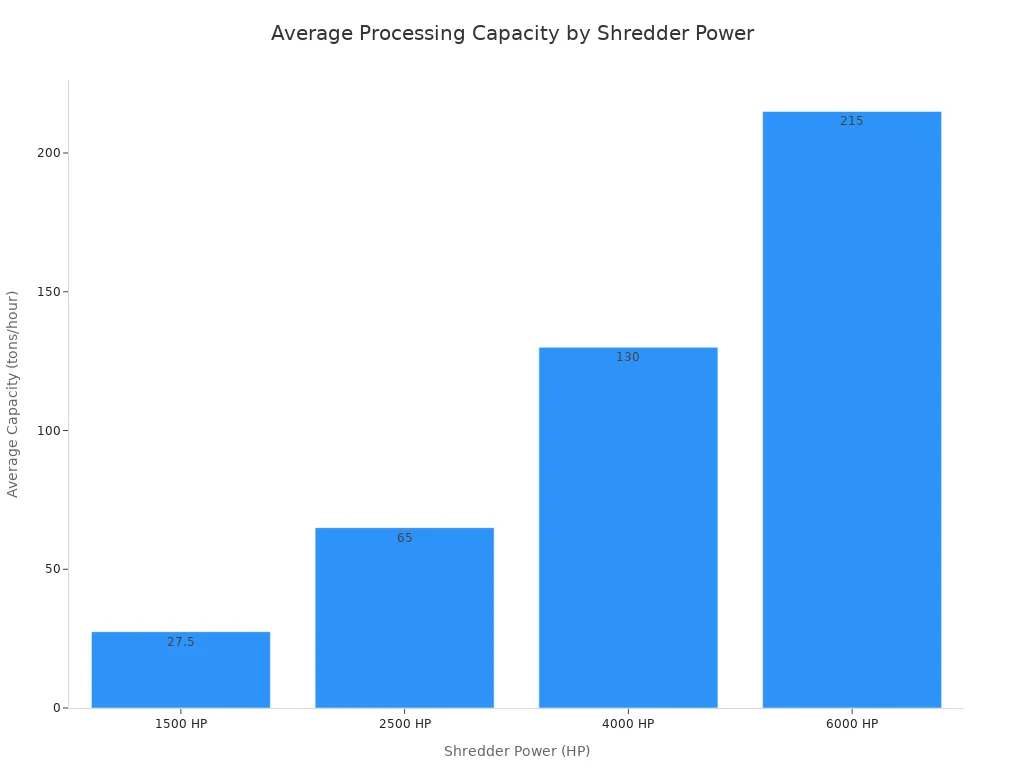
Shredders work alongside shears by handling different material types. A 200 kW double-shaft shredder processes 8–15 tons per hour of mixed light scrap, but only 3–6 tons per hour of dense engine blocks. Heavier materials slow down throughput. You should match your equipment to the scrap you handle most often. Low-speed dual-shaft shredders typically process 5 to 30 tons per hour of mixed or bulky scrap, while high-speed hammermill systems can exceed 100 tons per hour.
This scrap metal preparation step ensures consistent particle sizes. Uniform pieces melt faster and more evenly, reducing energy use in the furnace. You also cut down on labor costs because machines do the heavy lifting instead of workers with torches.
Compacting and Baling for Efficiency
Once you shred the scrap, you still face storage and transport challenges. Loose metal shavings and shredded pieces take up valuable floor space. Huanhong hydraulic scrap metal baling presses solve this by compressing scrap into dense, uniform blocks. The actual bale density varies significantly, depending on equipment tonnage, material type and processing conditions. Representative density reference data is shown below:
| Material Type | Loose Density (kg/m³) | Bale Density (kg/m³) | Notes |
| Aluminum Cans | 80–100 | 350–600 | Values of 800‑900 kg/m³ are typical for small briquetting presses; large‑scale hydraulic balers for standard square bales generally cannot reach this level |
| Steel Sheet | 250–350 | 1,000–1,200 | — |
| Mixed Scrap | 200–300 | 1,000–1,100 | — |
| Heavy Steel | 400–500 | 1,200–1,400 | Higher‑pressure baling equipment may achieve even higher compacted density |
| Copper/Brass | 600–800 | 1,200–1,600 | — |
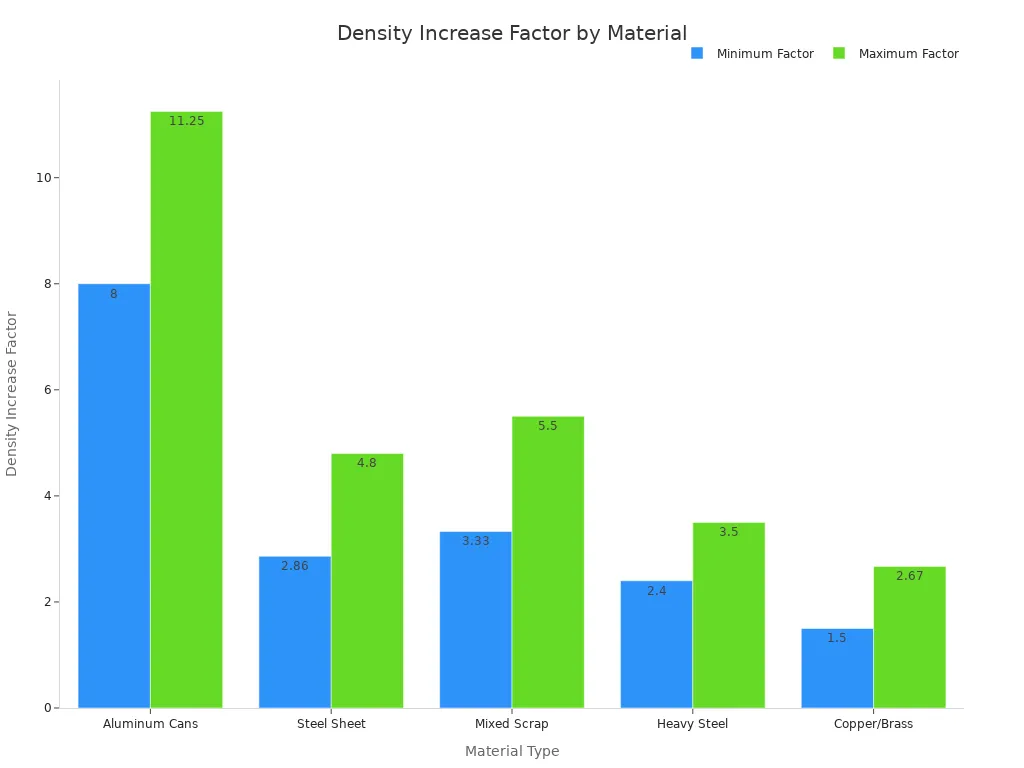
Baling increases material density by multiples that range roughly from 2.9 up to over 11‑fold, subject to material characteristics and machine specifications. Aluminum cans see the largest relative density improvement, whereas heavy‑grade steel yields a comparatively lower magnification. Higher‑density bales allow you to load more material per truckload, greatly cutting transportation expenditure, while also freeing up valuable warehouse floor space for additional scrap stock.
Huanhong hydraulic balers deliver neat, consistent square bales suitable for stacking and easy forklift handling. Feeding well‑formed uniform bales into melting furnaces helps maintain smooth downstream recycling workflows. Proper compaction also mitigates oxidation losses during smelting: reduced exposed surface area lowers metal degradation from air contact. Investing in high‑performance baling equipment lifts overall operational efficiency across every stage of your scrap‑metal recycling facility.
The Step-by-Step Process of Melting and Purification
Once your scrap is sorted and processed, it reaches the core of the operation: the furnace. This stage turns solid, shredded metal into liquid. You must control the temperature with care because each metal has its own melting point. Aluminum melts at 660°C (1220°F), while steel needs a much hotter 1370°C (2500°F). Getting this right affects the quality of your final product.
Melting in Industrial Furnaces
You have several furnace choices, and each one offers different efficiency levels. Induction furnaces lead the pack with over 90% thermal efficiency. Tower furnaces follow at 40-77%. Reverberatory furnaces range from 15-39%, though they can reach 50-55% with heat recovery systems. Rotary and crucible furnaces generally run at lower efficiency, making them less common in modern scrap metal recycling plants.
The electric arc furnace (EAF) dominates steel production. This equipment uses powerful electric arcs to create intense heat. You can melt a typical heat of scrap steel weighing 130 to 180 tons in less than 40 minutes. That speed makes EAFs the workhorse of the industry.
Energy use varies with furnace size and technology. Ordinary electric arc furnaces handling 30-100 tons use 350-600 kWh per ton. Large steelmaking furnaces above 100 tons consume less energy at 300-450 kWh per ton. Advanced systems with scrap preheating and oxyfuel burners achieve even better numbers at 280-400 kWh per ton. The global average for EAF steelmaking sits around 400 kWh per ton.
An electric arc furnace can melt a typical heat of scrap steel (130 to 180 tons) in less than 40 minutes.
You should match your furnace choice to the metals you process most often. A facility handling aluminum needs different equipment than one focused on steel. Your scrap metal recycling operation becomes more profitable when you pick the right furnace for your material mix.
Recycling Steel: Purification and Alloying
After melting, you must remove impurities from the molten metal. This purification stage decides whether your recycled steel meets industry standards. Contaminants like dirt, paint, and other metals weaken the final product if left in place.
The steel recycling process typically involves several purification steps. You introduce oxygen to the molten bath, which reacts with impurities like carbon and silicon. These reactions form gases and slag that float to the surface. You then skim off this slag layer, leaving cleaner metal behind.
Filtration plays a key role in recycling steel. You pass the molten metal through ceramic filters that trap solid particles and non-metallic inclusions. This step improves the mechanical properties of the final product.
Alloying comes next. You add specific elements to achieve the desired chemical composition. Carbon increases hardness. Chromium adds corrosion resistance. Nickel improves toughness. The exact recipe depends on what manufacturers need for their products.
This careful control means recycled steel performs just as well as virgin steel. Many industries now specify recycled content in their products. Your recycling steel operation can produce material that meets the most demanding specifications.
The purification stage also reduces waste. By removing impurities early, you avoid producing defective batches later. This efficiency translates directly into cost savings for your scrap metal recycling plant.
When you complete the melting and purification stages, you have clean, molten metal ready for the next step. The solidifying stage will shape this liquid into ingots and other forms that manufacturers can use. Each stage builds on the previous one, creating a smooth, efficient recycling process from start to finish.
Solidifying and Transporting: Final Steps
After purification, you have clean, molten metal ready for its final transformation. This stage turns the liquid into solid products that manufacturers can use. The process requires careful control to ensure quality and efficiency.
Forming Ingots and New Products
Most recycling plants use continuous casting machines to shape the molten metal. These machines cool the liquid into semi-finished forms like slabs, billets, or blooms. The method you choose depends on the metal type. Vertical continuous casting works well for aluminum and specialty metals. Curved continuous casting is the dominant method for steel. Horizontal continuous casting offers a shorter building height and applies to both nonferrous alloys and steel.
The solidified metal often takes the form of ingots. These ingots come in standard sizes for easy handling and processing. For example, a common steel ingot measures 7x8 inches, is 48 inches long, and weighs 335 kg. Larger ingots can weigh up to 10,000 kg. These standardized shapes make it easy for manufacturers to remelt and form into new products. Cooling and solidification can be energy-intensive. In some advanced systems, cryogenic cooling can consume up to 40% of the total process energy budget. This recycled steel performs just as well as virgin material, completing the transformation from scrap to valuable raw material.
Transportation to Manufacturers
The final step is shipping these solid metal products to manufacturers. Transportation costs are a key factor in the recycling business. Recycled materials are often heavier and denser than raw ore, leading to higher transport costs. For example, transporting recycled steel scrap over short hauls costs about 3.69 cents per ton-mile, compared to 2.8 cents for iron ore. The gap widens on longer hauls. Efficient logistics are essential to keep the overall recycling process profitable. Manufacturers use these recycled ingots and billets to create everything from car parts to building materials. This final delivery closes the loop in the scrap metal recycling process. Your scrap metal recycling plant has successfully turned waste into a valuable resource for the economy.
You now understand the complete journey: collection, sorting, processing, melting, purification, solidifying, and transportation. This scrap metal recycling plant workflow transforms waste into valuable raw materials. The benefits of recycling steel are clear. Steel recycling rates in the US reach 92% annually, and the global metal recycling market grows at 4.0% CAGR through 2030.
The Global Metal Recycling Market is projected to grow at a steady CAGR of 5.6% from 2024 to 2030, rising from USD 74.3 billion in 2024 to USD 102.7 billion by 2030.
Recycling steel conserves resources, saves energy, and reduces landfill waste. You also earn money from scrap while supporting sustainability. Efficient equipment from Huanhong Hydraulic enhances your recycling facility's productivity. Their shears and balers streamline every stage. Embrace scrap metal recycling today. Your participation drives sustainability and creates economic value from clean, processed scrap. Meet your scrap metal recycling needs with reliable machinery and responsible practices.
FAQ
How much energy does recycling steel save compared to making new steel?
Recycling steel saves about 60 to 74 percent of the energy used to make new steel from iron ore. You also save raw materials like iron ore and coal. Cutting energy use lowers costs and cuts pollution. That makes recycling steel good for your money and the earth.
What metals can I recycle at a scrap yard?
You can recycle both ferrous and non-ferrous metals. Ferrous metals are steel and iron. Non-ferrous metals are aluminum, copper, brass, and lead. Each type has a different value and needs different melting temperatures. Ask your local scrap yard what they take and how to prepare it.
How should I prepare scrap metal before bringing it to a recycling plant?
Clean your scrap before you bring it. Take off plastic, rubber, and other non-metal parts. Separate steel from aluminum and other metals if you can. Drain fluids from car parts. These steps cut down dirt, raise the value of your scrap, and help the recycling process run smoothly.
Does recycled metal perform as well as new metal?
Yes. Recycled metal is just as good as new metal when it is processed right. Cleaning removes dirt, and adding other metals adjusts the mix to meet standards. Many makers now ask for recycled metal in their products. You get the same use with much less harm to the environment.
How does scrap metal recycling support sustainability?
Recycling scrap metal saves natural resources, cuts landfill trash, and uses much less energy. For example, recycled aluminum uses only about 5 percent of the energy needed to make new aluminum. By recycling, you help the planet and also earn money from materials that would be thrown away.


