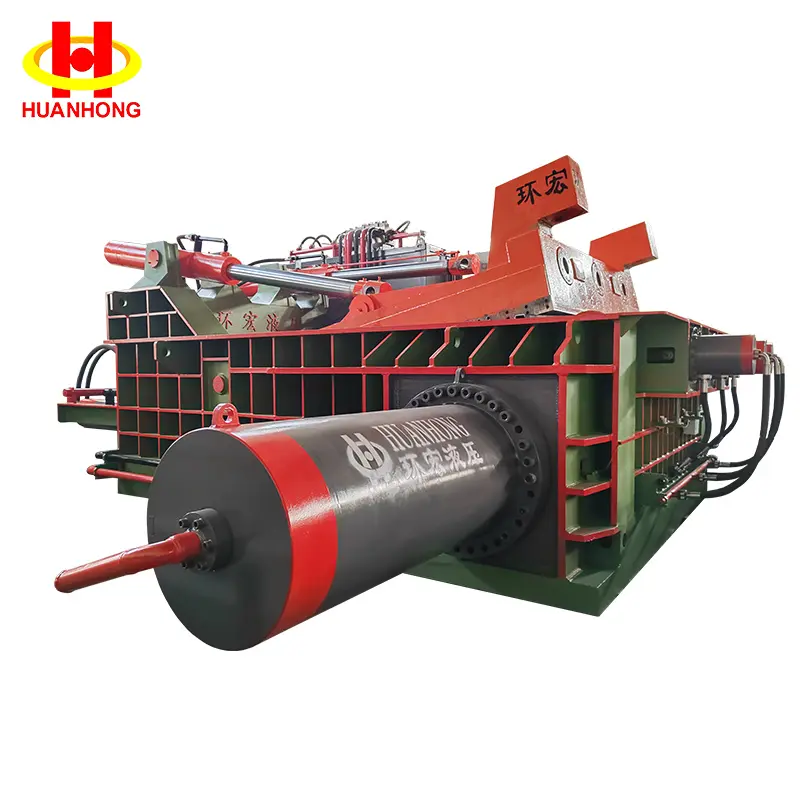
To effectively engage in scrap metal recycling, you need a variety of specialized machines. Common equipment includes shredders, shears, balers, sorting systems, and handling machinery. Each of these machines plays a crucial role in maximizing the amount of metal recovered from scrap. Modern recycling machines enhance the sorting process and reduce costs. This results in improved sorting efficiency, increased metal recovery, and lower energy consumption. These machines not only contribute to environmental protection but also increase the value of recycled metal.
Shredders break large scrap into smaller pieces for easier processing.
Shears cut metal with precision to ensure quality.
Balers compress scrap, making it easier to transport.
Sorting systems separate metals to maintain purity.
Handling machinery safely moves scrap materials throughout the recycling process.
Key Takeaways
Shredders chop big scrap into small pieces. This helps sorting and processing go faster.
Hydraulic shears cut metal very accurately. They make recycling safer and more efficient.
Balers squeeze scrap into tight bundles. This makes moving and storing scrap easier.
Sorting systems use magnets and eddy current separators. These tools help recover more metal.
Picking the right equipment helps workers do more work. It lowers costs and helps protect the environment.
Shredders in Scrap Metal Recycling
Shredders are very important in scrap metal recycling. These machines break big pieces of metal into smaller parts. Smaller pieces are easier to sort and move. This also helps with processing the scrap. There are different kinds of industrial shredders. Each one is made for certain metals and jobs.
Shredder Types
You can pick from many shredder types. The type you choose depends on your scrap. The table below shows the main types, their features, and uses:
Shredder Type | Description | Applications |
Single-Shaft Shredders | These are flexible and use a spinning shaft with blades. They can handle many materials. | Mixed waste and recycling centers. |
Dual-Shaft Shredders | These have two shafts and strong blades. They are good for tough and big metal pieces. | Large metal items and industrial machines. |
Hammer Mill Shredders | These use hammers that spin and smash materials. They work well for big jobs. | Cars, home appliances, and sheet metal. |
Shear Shredders | These have sharp blades that cut thick scrap. They make even pieces. | Metal beams and profiles. |
Grinders | These make scrap into tiny bits using a rough tool. They are good for making metal powder. | Making metal powder for factories. |
Vertical Shredders | These are for big items and have a tall rotor for crushing. | Car engines and transmissions. |
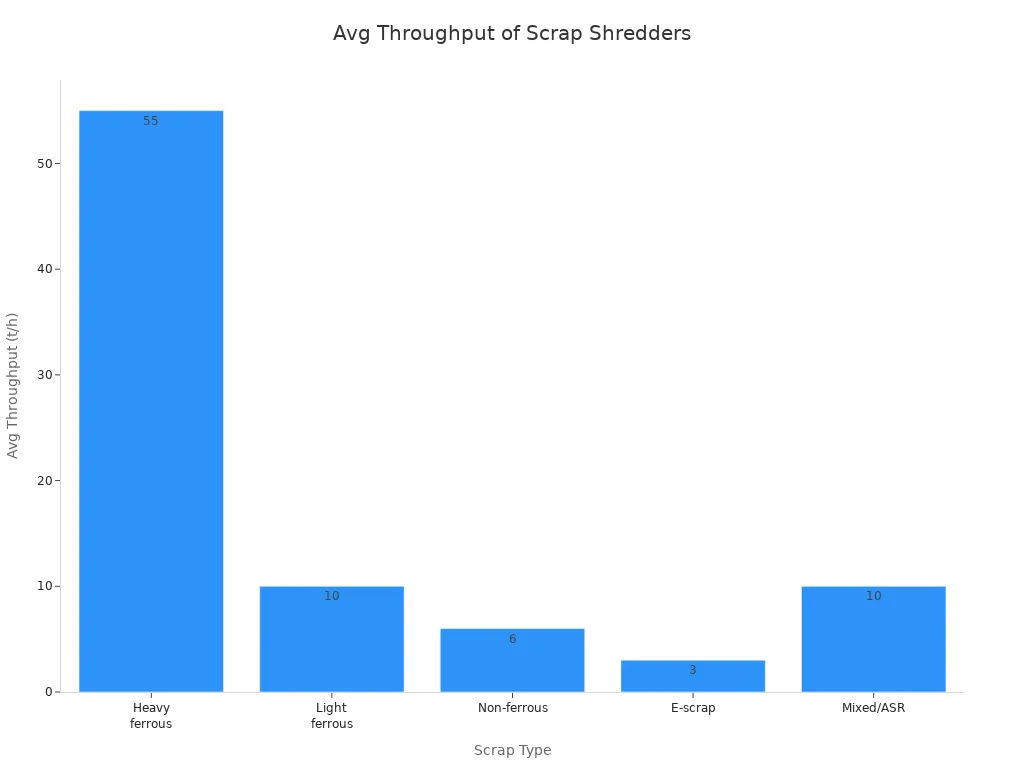
Industrial shredders can handle different amounts of scrap. The chart below shows how much each shredder can process by scrap type:
Shredder Benefits
Using shredders gives you many good results:
Shredders make your scrap denser by up to 50 percent. This means you need fewer trucks to move the same metal.
Shredders help you sort metals better. Good sorting means you get more metal back and earn more money.
Shredders lower labor costs because they do more work. This also keeps your workers safer.
Tip: Take care of your shredders often. This helps them work well and stops jams or breaks.
Industrial shredders can process heavy ferrous metals, light ferrous scrap, and non-ferrous materials. You can use them for car bodies, appliances, and even electronic waste. Picking the right shredder makes your recycling business better and helps you earn more.
Shears for Scrap Metal Processing
Hydraulic Shears Overview
Shears are used to cut metal into smaller pieces. Hydraulic shears are very important in recycling. There are many types of scrap shears. Each type works best for certain metals. The table below lists common shear types and their features:
Shear Type | Primary Features | Common Usage Regions |
Guillotine Shear | Gantry-like structure with a hydraulic-driven blade for efficient cutting. | Korea |
Inclined Shear | Angled cutting blade for gravity-assisted feeding, effective for bulky pieces. | EU market |
Alligator Shear | Jaw-like mechanism ideal for cutting long pieces like pipes and beams. | North America, Europe |
Rotary Shear | Rotating blades for continuous processing, suitable for thin sheets and strips. | Asia, Europe |
Crocodile Shear | Powerful jaw-like blade for cutting ferrous and non-ferrous metals. | Russia, Eastern Europe |
Hydraulic Shear | Uses hydraulic power for high cutting force and precision, versatile for materials. | North America, Europe, Asia |
Hydraulic shears use strong hydraulic systems to cut metal. They have tough frames and strong parts. These shears can cut steel, iron, pipes, I-beams, and car shells. You can pick from gantry, alligator, or container designs. Some shears have automatic oiling and computer controls. They also work with loaders. This lets you cut metal all the time and get even scrap sizes.
Shear Applications
Shears help you do many jobs in recycling. They cut big metal pieces into smaller ones. This makes sorting easier and saves work. Hydraulic shears help you work faster and keep machines working longer. You get cleaner cuts and easier handling later. Safety is better with guards, emergency stops, and easy controls. You can use shears from far away, so you stay safe.
Rules decide what equipment you can use. Following rules keeps your work safe and avoids fines. Some states, like California, have strict waste rules. You must follow these to keep your business safe.
Hydraulic shears use less energy than other types. This saves money on power and helps the environment. Some shears save up to 30 percent on energy. You can recycle more metal with less waste and lower costs.
Tip: Pick shears with automatic and safety features. This helps you work faster and keeps workers safe.
Shears help fix problems in recycling. They cut, size, and get metal ready for recycling. Good shears make your work faster and help you recycle more.
Balers and Compactors
Balers in Scrap Metal Recycling
Balers are important machines in scrap metal recycling. They squeeze and tie metal into tight, even bales. This makes it much easier to move and handle scrap. When you use a baler, you can stack metal neatly. You can also count the bales quickly. This helps you get shipments ready and keeps your work organized.
Balers help you save money too. With a baler, you can fit more metal in each truck. For example, a truck can hold about 8 tons of loose scrap. But it can carry up to 25 tons of baled scrap. This means you spend less on moving metal, about 20-30% less. You also need less space because you can stack bales in rows. This helps you make more money and recover more metal.
Balers help you follow recycling rules. They let you sort packaging waste at the start. You can also separate materials by type. Sorting is important for following the rules and getting more metal back. Many balers have features that help you follow the rules and recycle better.
Tip: Pick a baler that fits your scrap amount and metal type. This helps you get the best results for your work.
Compactor Functions
Compactors are not the same as balers. Compactors shrink the size of mixed waste, not just metal. These machines crush waste so it is easier to collect and throw away. Compactors need less hand work. You see them a lot at landfills and waste sites.
Here is a table that shows how balers and compactors are different:
Feature | Balers | Compactors |
Primary Function | Compress and bind recyclable materials into bales | Reduce volume of mixed waste for disposal |
End Goal | Create transportable bales with resale value | Volume reduction for disposal |
Common Materials | Cardboard, plastics, metals, textiles | Unsourced waste |
Typical Use | Recycling facilities, manufacturing | Landfills, waste management |
Labor Requirement | Requires more manual labor for sorting | Generally less manual labor required |
Both balers and compactors help you make less waste and move it less often. They also help keep trash out of landfills and make recycling better. If you use the right machine, you can get more metal back and follow the rules for the environment.
Sorting and Separation Equipment
Sorting and separation equipment are very important in scrap metal recycling. These machines help you get valuable metal out of mixed trash. New recycling machines can get back almost 95% of metals. This makes recycling work better and helps recycling centers earn more money. You see these sorting systems in many places, like car recycling, electronic waste, and city trash plants.
Magnetic Separators
Magnetic separators help you find ferrous metals like steel and iron in scrap. You use machines like cross-belt magnets, drum magnets, and magnetic pulleys. These machines pull metal out and leave other stuff behind. Magnetic separators work in recycling centers and building waste sites. They can get back a lot of metal from the trash.
Separator Type | Recovery Rate (%) |
Concentric (Standard) | 90–95 |
Eccentric | 85–93 |
High-Frequency | 80–90 |
Wet | 75–88 |
Magnetic separators are needed to get the most metal back at recycling centers. They help keep less trash out of landfills and make recycled metal cleaner. Newer machines can even get tiny pieces of metal, smaller than one inch.
Tip: Use magnetic separators early in the recycling line. This helps you pull out ferrous metals and sort better.
Eddy Current Separators
Eddy current separators are for non-ferrous metals like aluminum and copper. These machines use electromagnetic induction to pull these metals out of mixed scrap. They work well in places that recycle aluminum cans, electronics, and plastics. Eddy current separators can get back up to 95% of non-ferrous metals. This makes them very important in recycling.
You see eddy current separators in big recycling centers that handle lots of metal every day. New machines can even find small bits of metal, which makes recycled metal worth more. Optical sorting and sensor machines help make the metal even cleaner and better. For example, in Japan, AI-powered sorting systems made recycled metals better, so they sold for more money.
Magnetic separators get ferrous metals.
Eddy current separators get non-ferrous metals.
Optical and sensor machines help sort better.
Good sorting machines help you earn more and send less trash to landfills.
You need sorting and separation equipment to make recycling faster and get good metal for the recycling business.
Material Handling Equipment
Conveyors and Loaders
You need good machines to move scrap metal around. Conveyors and loaders help move metal from place to place. These machines do the hard work for you. This means workers do not have to lift heavy metal. The machines make the work go faster and smoother. Workers can do other important jobs instead of carrying metal. Automated machines keep things moving in order. You get more work done with fewer stops. The results are steady and reliable.
Some common machines in recycling centers are:
Shredders that cut up lots of scrap metal with strong blades
Scrap shears that chop big metal pieces into smaller ones
Baling presses that squeeze loose scrap into tight bales
Special machines for non-ferrous metals like aluminum and copper
Conveyors and loaders also help keep people safe. They stop workers from lifting heavy things over and over. This helps prevent sore muscles and injuries. New conveyor systems have safety tools to stop accidents.
Tip: Pick machines with smart controls and safety sensors. These features help keep workers safe and make work faster.
Safety and Productivity
Safety is very important when handling scrap. There are dangers like cuts, scrapes, pulled muscles, pokes, and smashed fingers. You can make things safer by storing scrap the right way, teaching workers, and following safety rules. OSHA says workers should wear safety gear to stay safe.
New recycling machines have special safety features. The table below shows some of the best ones:
Safety Feature | Description |
Enhanced Visibility Technology | Cameras let you see all around the machine so you do not miss anything. |
Obstacle Detection | Cameras and sensors warn you if someone or something is too close. |
Operator Coaching App | The app gives tips to help workers use machines safely and well. |
Advanced Telematics System | This system checks how workers use machines and if they need fixing. |
Daily Walk-around Inspection | Workers look over machines each day to find problems before starting. |
Using these features helps you get more work done. Workers stay safe and can focus on their jobs. You have fewer stops and fewer injuries. Good scrap handling means you get more metal and make more money.
Picking the right equipment is important for scrap metal recycling. It helps your recycling business work better. You can sort metal faster and get more metal back. Cleaner scrap is worth more money. You also spend less on moving metal and make better deals with other recyclers.
“Top companies know that good, strong machines break down less and get more metal, so they make more money.”
You should pick equipment that fits your recycling needs. Think about what the market wants and any problems you might face. The right machines help you recycle well and do well for a long time.
FAQ
What equipment do you need for scrap metal recycling?
You need shredders, shears, balers, sorting systems, and handling machinery. Each machine helps you break down, sort, or move scrap metal. Pick your machines based on how much scrap you have and what metals you recycle.
How do hydraulic shears improve recycling efficiency?
Hydraulic shears cut big metal pieces fast and with care. This saves time and means workers do less hard work. Some new models, like Huanhong Hydraulic’s Scrap Metal Shear, have automatic controls and safety tools.
Are balers and compactors the same?
No, they are not the same. Balers squeeze and tie up things you can recycle into bales. Compactors squash mixed trash to make it smaller for throwing away. You use balers for recycling and compactors for getting rid of waste.
What safety features should you look for in recycling equipment?
Look for emergency stop buttons, guards, and smart sensors. These features help keep you safe when using big machines. Training and checking machines every day also help stop accidents.


