Gantry shear
This is one listed scrap shear family. Ask the supplier for the model-specific material range, feed opening, holding method, loading requirements and capacity basis before treating it as suitable.

Views: 0 Author: Site Editor Publish Time: 2026-11-21 Origin: Site


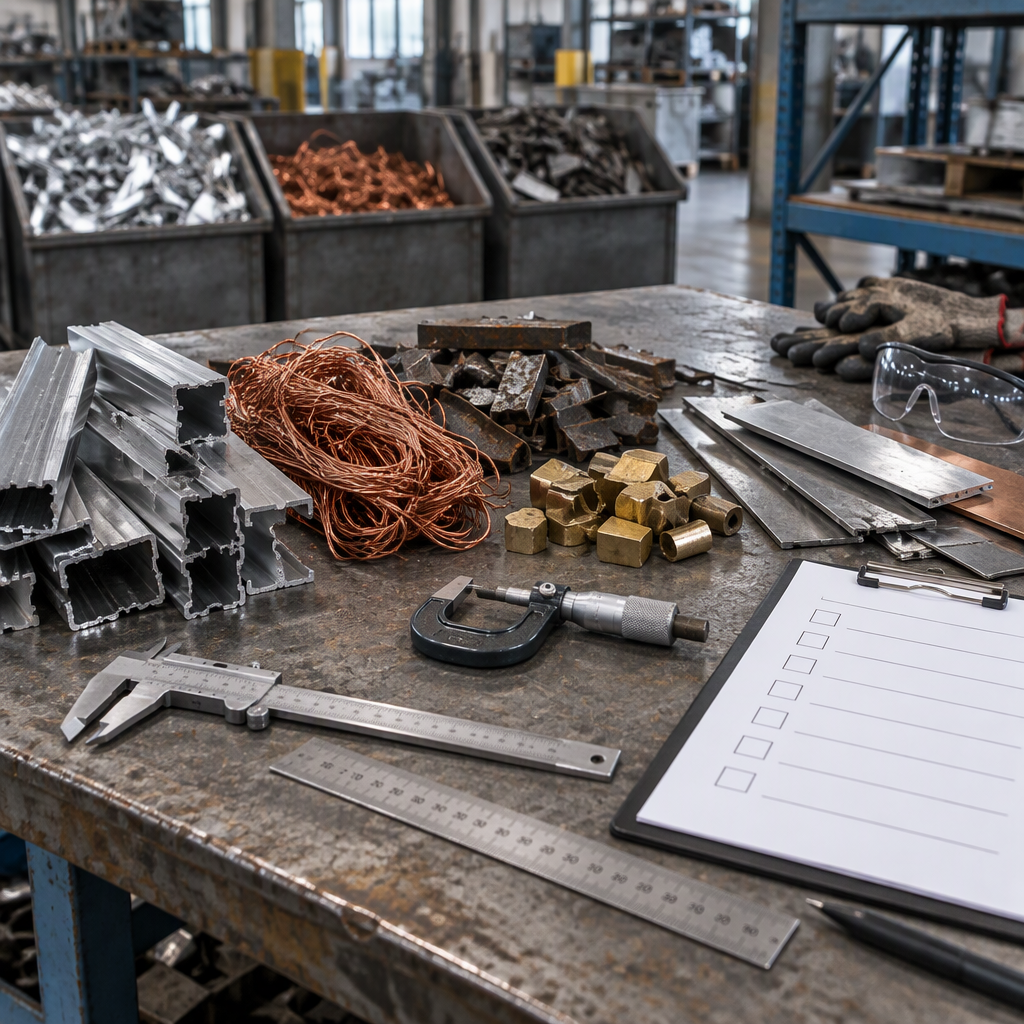
Scrap shear cutting capacity is not just a tonnage label; it is the fit between the machine, the material’s resistance to shearing, the effective cut area and how the feedstock is presented to the blades.
In mechanics, shear stress is force divided by the area over which the shearing force acts, and material behavior depends on material properties. For buyers, that means two pieces with the same outside dimension can behave differently if the alloy, wall thickness, layering or contamination differs.
Treat any stated capacity as a starting point, then test it against difficult real items such as long sections, dense bundles, mixed gauges, cast pieces or flattened bales.
Collect material grade, section geometry, maximum dimensions, bundle density and contamination before comparing scrap shear cutting capacity, because force depends on both material response and the area being sheared.
| Input to collect | Why it matters for selection |
|---|---|
| Material family | Different materials can require different shearing force for the same apparent section. |
| Effective cut area | Wall thickness, solid section, overlapping layers and bundle density change the area presented to the blade. |
| Feed form | Loose, bundled, bent or long stock changes loading method and the practical opening needed. |
| Output requirement | Cut length and package size affect cycle planning, downstream handling and storage. |
A preliminary force check can screen obvious mismatches by relating shearing force to material resistance and effective cut area, but it should not be treated as a validated sizing standard for mixed scrap.
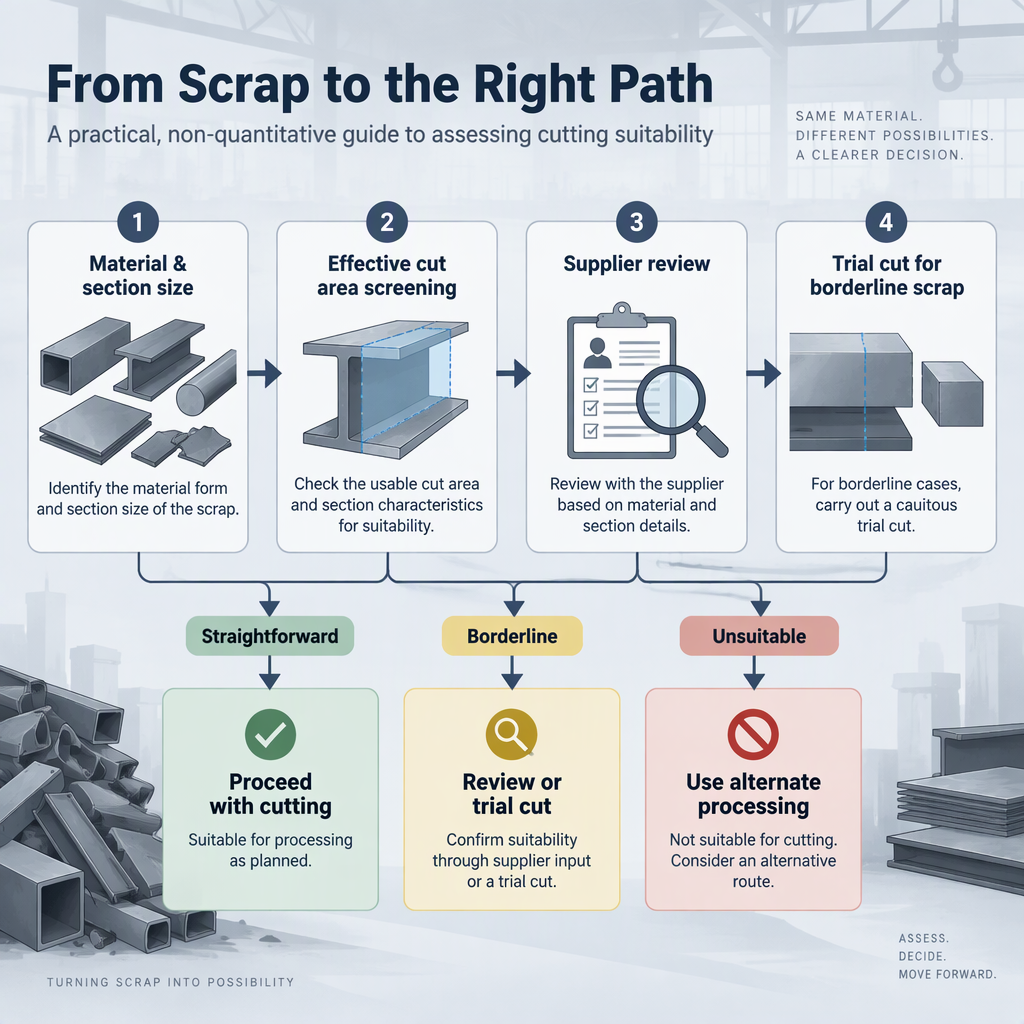
Use mechanics only for the force-and-area concept. Ask the supplier to confirm the capacity basis: material type, section shape, blade condition, hydraulic setting, cut length and feed preparation.
Use a trial cut when the feedstock is mixed, dense, irregular, near the machine limit or commercially important enough that a brochure comparison would create purchase risk.
A trial is most valuable when it matches your normal contamination, bundle density and operator loading method. A clean single piece may not represent a dense bale, nested pipe bundle or mixed demolition scrap.
A shear that can cut one difficult piece may still be the wrong selection if the feed opening, loading cycle, cut length or discharge layout cannot support the required production flow.
| Production question | Selection implication |
|---|---|
| What hourly or shift target must be achieved? | Ask for confirmation using your material mix and loading method, not only a maximum theoretical rate. |
| What cut length is required downstream? | Shorter pieces may increase cycle demand and discharge handling requirements. |
| How will material be loaded? | Crane, grapple, conveyor and manual pre-sorting each change practical feed constraints. |
| What package size leaves the site? | Transport, furnace charging or baler feed may require different output dimensions. |
Treat throughput as a system question: capacity, pre-sorting, loading, visibility, discharge space and downstream equipment.
A first-party scrap shear category identifies gantry shear, container shear and alligator shear families; use those names as a starting point for supplier questions, not as proof that any one family fits your feedstock.
This is one listed scrap shear family. Ask the supplier for the model-specific material range, feed opening, holding method, loading requirements and capacity basis before treating it as suitable.
This is one listed scrap shear family. Ask the supplier how the specific model handles your feed form, package size, output requirement and site layout before comparing it with alternatives.
This is one listed scrap shear family. Ask the supplier for the permitted material sizes, operating method, guarding, manual-handling limits and documented capacity basis for your work.
| Selection question | What to request from the supplier |
|---|---|
| Which listed shear family is being proposed? | Model-specific documentation showing the family name, intended feed form and stated application limits. |
| What real feedstock must it cut? | Written confirmation against your photos, dimensions, material list, bundle density and hardest recurring item. |
| How will the workflow operate on site? | Confirmation of loading method, holding method, discharge route, operator position and safe access requirements. |
A technically capable scrap shear can still be unsuitable if the site cannot support safe loading, inspection, maintenance access, operator competence and local work-equipment requirements.
Safety requirements are jurisdiction-specific. Include inspection, maintenance and competence in the purchase review, and follow local law and the supplier’s operating manual.
A useful RFQ gives suppliers enough feedstock and site information to confirm suitability, identify limits and recommend trials.
The most common mistake is treating one capacity figure as universal, even though cutting demand changes with material properties, effective section area and how scrap is presented to the blade.
Avoid comparing machines only by headline tonnage, accepting a clean-sheet test as proof for mixed scrap, ignoring feed opening and hold-down limits, or assuming a larger shear automatically improves the whole plant flow.
To select a scrap shear, convert real feedstock into measurable inputs, screen the difficult sections carefully, then ask suppliers to confirm capacity against your material, throughput, package and site conditions.
This keeps the decision tied to actual plant work and gives teams a clear basis for comparing offers, requesting trials and avoiding unsuitable equipment.
These buyer questions help turn capacity ratings into practical application checks for recycling plants, metal processors and procurement teams.
No. Higher tonnage can help only if the feed opening, blade arrangement, hold-down, loading method, cut length and site flow also fit the actual material. Capacity must be checked against material and effective cut area, not tonnage alone.
Start with the hardest recurring item that the plant genuinely needs to cut. A rare oversized item may require a separate handling plan, while an ignored recurring item can limit daily production.
Use force-and-area logic only as an early screen. General mechanics explains the relationship between force, area and material response, but mixed scrap requires machine-specific confirmation.
Request a trial when material is mixed, dense, irregular, near the stated limit, costly to process or critical to the purchase justification. Ask for the trial to match your real loading and output requirements.
Use the listed family names as category labels, then compare supplier documentation for your feedstock form, loading method, required cut size and workflow. The final choice depends on model-specific limits and confirmation for your actual material.
Include photos, dimensions, material grade, bundle density, maximum section, throughput target, cut length, loading method and site constraints. Ask the supplier to state the conditions behind any capacity confirmation.
No. Work-equipment obligations vary by jurisdiction. Include inspection, maintenance, training and competence in the purchase review, and confirm local requirements with the responsible authority or qualified safety professional.


