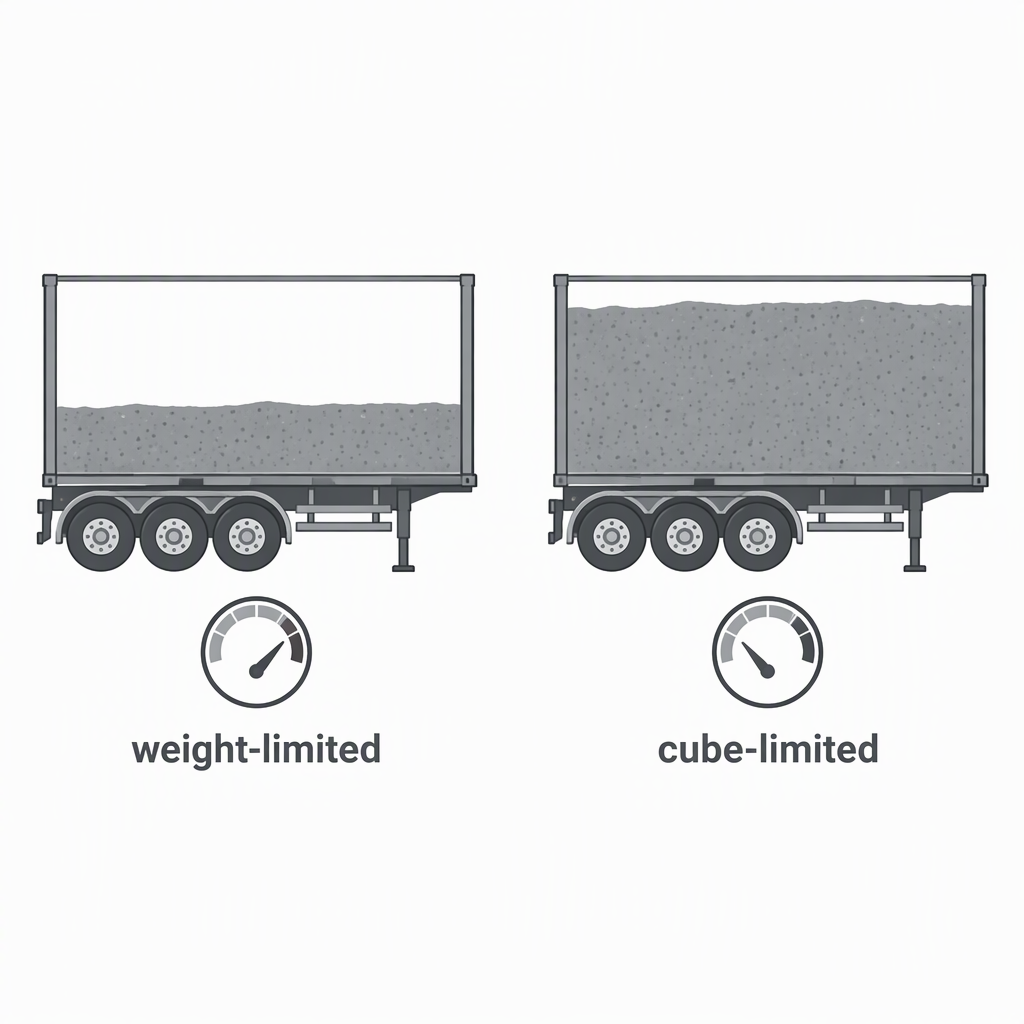
Choosing between a baler and a compactor starts with three measurements you take on your own site: the form the material arrives in, the bulk density you achieve before and after compression, and the way your hauler prices and limits each load. A load can run out of weight while space remains, or fill its space while the axles stay light, so which fits your waste handling and hauling costs is decided by the payload you can legally move per trip at a price you can verify, not by the category name.
Baler vs. Compactor: What Actually Differs?
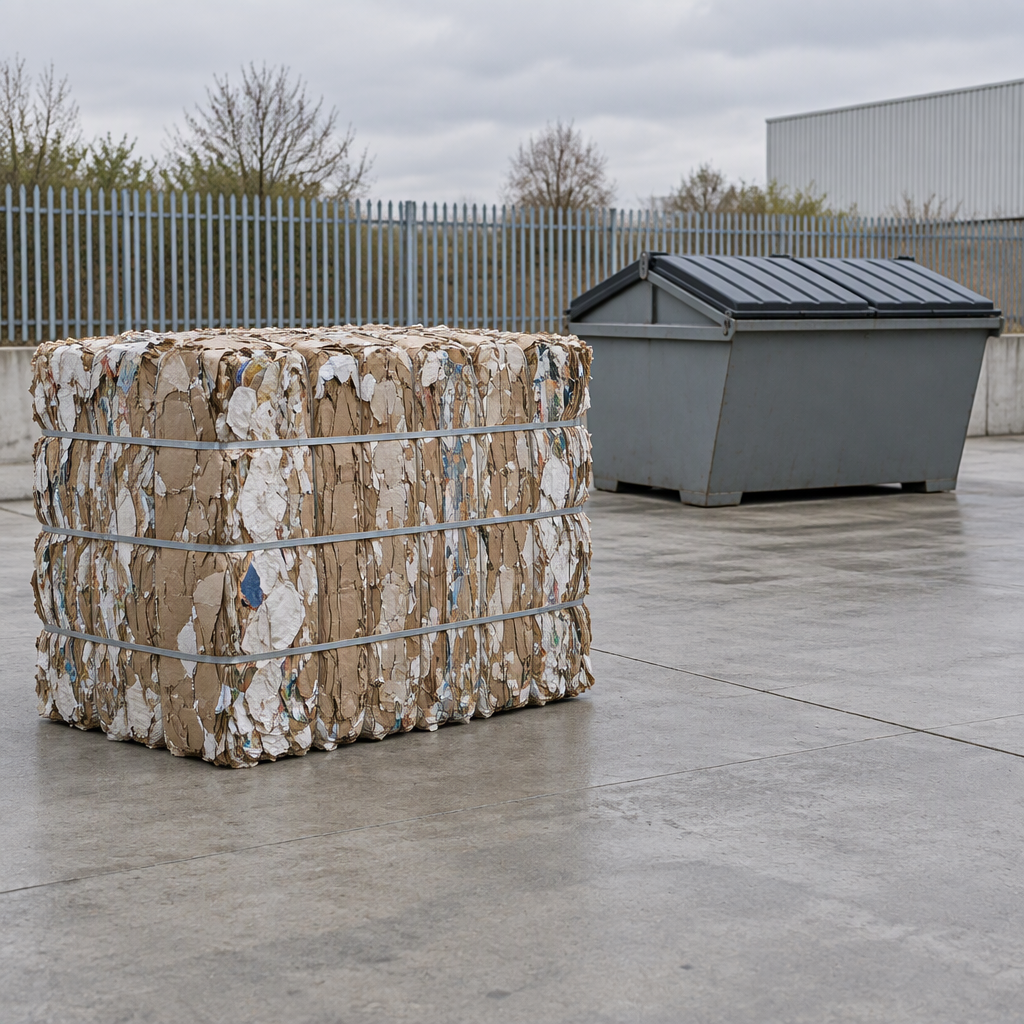
Which machine fits your waste handling turns on the form the material leaves the site in. A baler presses material into a bound, stackable bale that ships as a unit; a compactor presses it into a container that is hauled as a unit. HUANHONG's published catalogue lists vertical, horizontal, waste paper and scrap metal balers, and describes its metal balers as compressing waste steel, aluminium and copper into bales.
Baler
What leaves the site
A bound, stackable bale that can be weighed and shipped as one unit to a mill or foundry.
Documented applications
Scrap metal recycling sites, scrapyards, manufacturing plants and scrap car dismantling yards.
Available range
Vertical, horizontal, waste paper and scrap metal balers.
What to request in writing
Bale dimensions and weight, the binding method, storage space for finished bales, and the labour needed to tie and move them.
Compactor
What leaves the site
A filled container or receptacle hauled as a unit, rather than bales handled one at a time.
Documented applications
Ask each supplier which sites run your material stream, because the fit depends on the container format that supplier builds.
Available range
Ask which container sizes and formats are offered, and how the filled unit is transported and emptied.
What to request in writing
Container volume, the footprint and power the unit needs, who empties it, and the weight the filled unit reaches.
What Decides Your Hauling Bill: Weight, Cube or Trips?
Your bill is decided by whether a load runs out of weight or out of space first. On the US Interstate System the maximum gross vehicle weight is 80,000 lb (23 CFR 658.17), with 20,000 lb on any one axle and 34,000 lb on a tandem set, subject to the bridge formula. A light, bulky stream runs out of space while the axles are still under their allowance; a heavy, dense stream runs out of weight while the container still has room. Compression changes how much material fits the space, not what the axles may carry.
Size caps the load as well. Commercial motor vehicles may run 102 inches wide on the National Network, and because there is no federal height limit, most state limits fall between 13 ft 6 in and 14 ft. Federal width limits do not apply to special mobile equipment, so a machine delivered on its own wheels follows different permitting from one arriving on a low-loader. These are US rules; if your site is elsewhere, your own national, state or provincial limits apply.
What limits the load
How you can tell
What compression changes
What to confirm with your hauler
Weight allowance
The container is at its gross or axle allowance with visible air space above the material.
Higher bulk density puts more material into the same volume, so fewer trips carry the same tonnage.
That the quote shows per-pull, per-tonne and minimum-charge rates.
Space in the container
The container is full to its working height while axle weights stay well under the allowance.
Higher bulk density means the same volume carries more mass, so fewer lifts are needed.
Which container size and weight allowance the hauler will place on site.
A fixed charge per pull
Volumes are low enough that a fixed charge applies whatever the payload.
Little, unless compression removes container swaps or frees storage space.
Whether a smaller container or an on-call schedule would cost less overall.
EPA guidance for commercial buildings makes the same point: increasing recycling can cut disposal costs, and knowing what waste you produce lets you reduce hauling costs and negotiate services that fit.
Rates, tipping fees, container-rental terms and payback periods depend on your material, your location and your contract, so they have to come from your own quotes rather than from any general comparison.
Get the price basis from your hauler in writing, and treat every performance number a supplier gives you as a claim that still has to survive a trial on your own material.
Which Waste Streams Should You Bale?
Baling suits streams that hold their shape when compressed and that a downstream buyer will accept as a unit. The published range covers paper and board as well as metal, so the screening question is which output your receiver buys: a paper bale, a light-metal bale, or heavy scrap that has to be sheared or briquetted first.
Packaging is usually where the conversation starts. The US EPA estimated 82.2 million tons of containers and packaging generated in 2018 — 28.1 percent of municipal solid waste generation — with a 53.9 percent recycling rate for that category, and notes that containers and packaging, especially corrugated boxes, are among the most frequently recycled products.
Treat those figures as context, not a forecast: the EPA series covers US municipal solid waste only, most recently from 2018, and leaves commercial and industrial scrap out, so your own tonnage has to be measured.
Stream
Output that baling can produce
Confirm before you commit
Corrugated board and mixed paper
A dense paper bale from a vertical or horizontal waste paper baler.
The bale size and grade your mill or broker accepts, plus dry storage for finished bales.
Aluminium and copper offcuts
Bales for storage, transport and remelting.
Whether your buyer wants the metals separated before baling.
Heavy steel scrap
Ask whether the stream suits baling, or needs shearing or briquetting first.
The maximum piece size the machine accepts, confirmed in writing.
Wet or mixed commercial waste
A question to put to the supplier and your hauler together, because moisture changes both weight and acceptance.
Whether the material must be drained or separated first, and who may handle it.
When Might a Compactor Fit Better Than a Baler?
Shortlist a compactor when the stream is light, bulky and generated continuously, when material already leaves your site in containers, and when you would rather not add a bale-tying step and a dry bale store. Treat that as a hypothesis rather than a rule: ask each supplier to state capacity, compaction ratio, cycle time and container format in writing, and require a trial on your own material.
If your hauler charges a minimum per pull and your volumes sit below it, filling a container more densely may not change the bill at all — the trip, not the payload, is what you are buying.
If your buyer specifies bound bales, a compacted container load will not meet that specification. Confirm the requirement with the receiver before you choose a container format.
Compacting wet or mixed material adds weight per unit of volume, so check loaded axle weights before dispatch.
What Site, Power and Delivery Constraints Must You Verify?
Walk the route the machine will take and the space it will occupy before you order anything. Delivery access, floor area, clear height and electrical supply most often decide which option is installable, so measure them and give the same figures to every supplier you ask to quote.
Clear floor area for the machine, plus the operating and maintenance clearances named in the manual.
Door, gate and aisle widths along the whole delivery route, measured rather than estimated.
Electrical supply, voltage and protection at the intended position, checked by your own electrician against the machine's nameplate data.
Floor loading capacity, anchoring method and drainage at the final position.
Storage for finished output and for consumables, with a clear route for the vehicle that will collect it.
Ask each supplier for the machine's shipping dimensions, then compare them with the 102-inch federal width limit for the National Network and your own state's height limit.
Walk the delivery route at its narrowest point and confirm turning space, ground strength and overhead clearance with the company that will deliver.
Confirm the electrical supply at the chosen position with your own electrician against the machine's nameplate data.
Map the material flow from collection point to finished bale or filled container, including who moves it and where it waits.
Confirm that guarding, anchoring and energy-isolation duties are met before the machine is released to production.
What Safety Duties Apply to Either Machine?
Both machines have a point of operation, and the US general machine-guarding standard at 29 CFR 1910.212 requires guarding to protect operators from hazards such as the point of operation, ingoing nip points and rotating parts. It requires the point of operation of machines whose operation exposes an employee to injury to be guarded, and it requires machines designed for a fixed location to be securely anchored.
Maintenance on either machine falls under the hazardous-energy-control standard, 29 CFR 1910.147, the control of hazardous energy (lockout/tagout). It applies to servicing and maintenance of machines where unexpected energisation, start-up or release of stored energy could injure employees, and it requires an energy control programme, documented procedures, training and periodic inspection. Servicing during normal production is covered only where an employee must remove or bypass a guard or another safety device.
Before anyone reaches into a compression chamber, a feed opening or under a raised press plate to clear a jam or clean the machine, switch the machine off and disconnect it from its power source — or isolate and lock out the supply where the machine has one — and then follow only the access procedure the machine builder's manual permits. Do not open guards or work inside the compression zone while the machine is connected to power.
A written energy-control procedure for the machine, with documented procedures, operator and maintenance training, and periodic inspection.
Guarding of the point of operation, ingoing nip points and rotating parts, including interlocked access doors.
Secure anchoring of the machine at its final position.
Isolation points identified and marked on the machine and recorded in the manual.
A standing rule that jams are cleared only after isolation, and never with the machine connected to power.
Local rules checked separately: these duties are US federal general-industry requirements, so sites elsewhere follow their own national and local rules alongside the manual.
What Should an RFQ for Either Option Contain?
Send one field list to every supplier so that the quotes answer the same questions. Offers written against different assumptions cannot be ranked, and the cheapest-looking one is often the one that left the most work — installation, consumables, training or the container itself — for you to cover.
Material stream, form, and how much of it you generate per shift.
Loose bulk density measured on site, and the density a trial achieved.
Required output: bale dimensions and weight, or container volume and format.
Who buys the output, and the specification they apply.
Site data: floor area, clear height, door widths, delivery route limits and available power.
Consumables, operator time and routine maintenance.
Guarding, controls, anchoring and the energy-isolation procedure supplied with the machine.
Machine shipping weight and dimensions, and who unloads it.
Who installs, commissions and trains operators, and what is committed in writing rather than verbally.
Conclusion: Decide on Measured Data, Not on the Category
Decide on three numbers you produce yourself: the stream's loose bulk density, the density the machine achieves in a trial, and the price your hauler charges for compressed output against loose material. Which option fits your waste handling follows from whether those numbers cut the cost of moving the same material.
Measure the stream, and get the hauling price basis in writing.
Trial the machine on your own material and record the output density.
Verify delivery access, floor area, clear height and power before you order.
Confirm guarding, anchoring and energy-isolation duties before release to production.
Confirm the receiving specification for the finished bale or container load.
Frequently Asked Questions
These are the questions that usually decide the choice once both categories still look plausible on paper.
Is hauling priced by weight, by volume or by number of trips?
That is set by your hauler, not by the machine. Federal rules only cap what a load may weigh and how large it may be — 80,000 lb gross on the Interstate System, for example — so ask your hauler to price the same tonnage and volume per pull, per tonne and with any minimum charge, and compare the answers on that basis.
Can metal scrap go into a baling machine?
Yes. Scrap metal balers are a published product family, and the manufacturer describes them as compressing waste steel, aluminium and copper into bales for storage, transport and remelting. Ask the supplier how thick a piece the machine accepts, and whether your heaviest scrap needs shearing or cutting to size first.
Does a baler need wire or strapping, and how does that change the sums?
Ask each supplier which binding method the machine uses, where the consumable is bought, and how a finished bale is secured and stacked. Wire, strapping and the labour to tie a bale are operating cost lines in the comparison, not an afterthought, and they also determine how much floor space the finished bales need.
Who decides whether my bales or compacted loads are acceptable?
The receiver does. Mills, foundries and brokers apply their own specifications, so agree the requirement with your buyer before you fix bale dimensions or container format, and write it into the RFQ.
What happens to material while the machine is down?
Have a bypass ready before installation: keep access to your existing containers, agree with your hauler how missed or extra pulls are handled, and confirm in the order what spares and response the supplier commits to. Keep the manual and the energy-isolation procedure where operators can reach them.
Should I ask for a demonstration or a trial with my own material?
Ask for a trial on your material rather than a demonstration on prepared samples. Agree beforehand what you will measure — achieved density, unit weight, time per cycle, operator effort — and who supplies the labour and consumables, so the result sits directly beside your hauler's price basis.
How do I test bale or compacted density before committing?
Weigh a measured volume of loose material first, then weigh the unit the machine produces in the trial and divide by its volume. Repeat over at least a full shift so moisture and material mix are represented, and compare hauling options using the lower result rather than the best one.