Use the benchmark for sorting language
APR’s listed plastic groups, including PET, HDPE, PP, mixed rigids, film and polystyrene, give procurement and operations a shared vocabulary for plastic bale sorting.

Views: 0 Author: Site Editor Publish Time: 2026-11-18 Origin: Site


Improve bale consistency by sorting feedstock to the buyer’s commodity specification first, then confirming material family, structure, contaminants, sample-bale behavior and batch records before choosing settings or equipment.
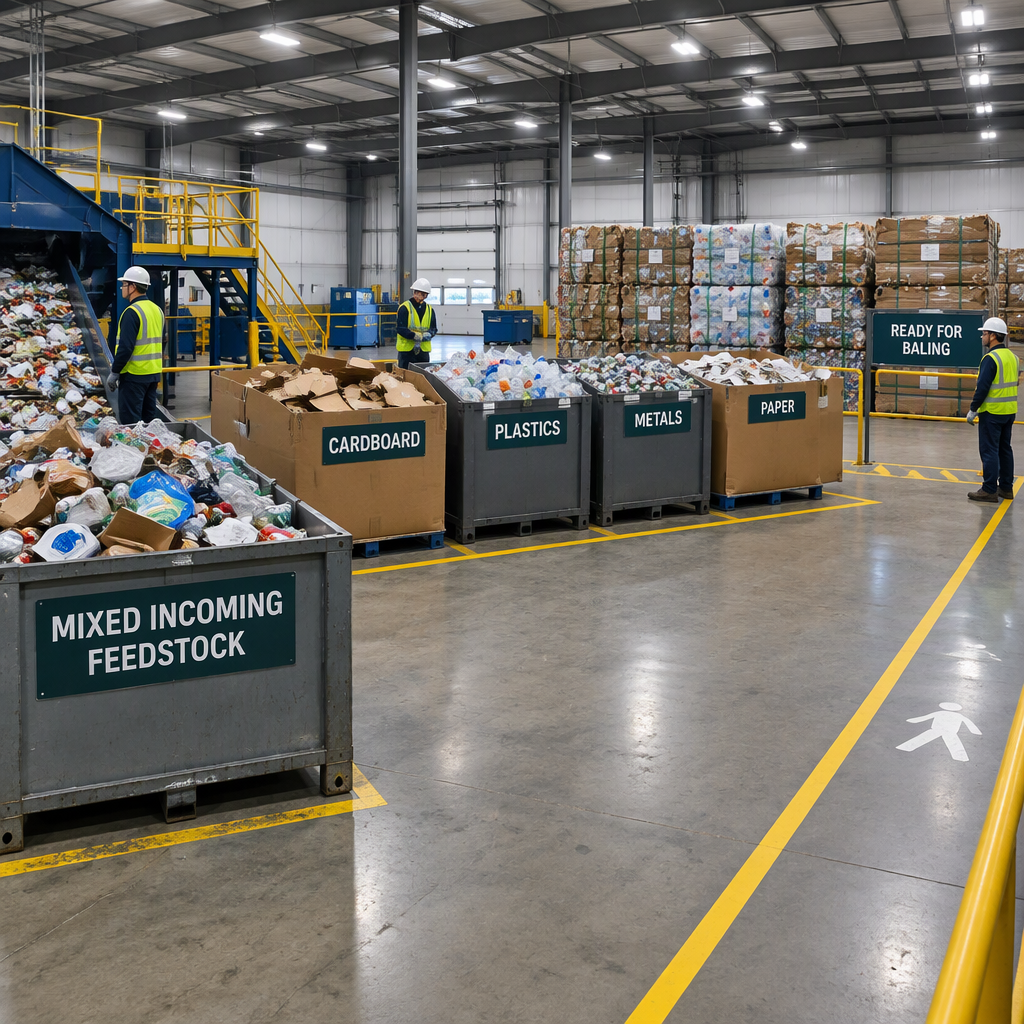
Before feedstock reaches the baler, define the commodity stream the buyer expects, because industry specifications are organized around processed scrap commodities rather than a generic label such as “mixed recyclables.”
Sort by the buyer-ready output stream, not by convenience at the tipping floor, because bale specifications are used to communicate what producers, sellers and purchasers expect from a bale.
| Sorting checkpoint | Buyer decision it supports | What to confirm |
|---|---|---|
| Commodity family | Whether the bale can be sold under the intended scrap commodity category | Buyer’s accepted grade and excluded materials |
| Plastic resin or product group | Whether the plastic bale fits a recognized plastic bale category | Buyer’s category name, update version and receiving rule |
| Part structure | Whether material feeds and compresses consistently | Limits for hollow parts, film, bulky shapes and dense pieces |
| Batch identity | Whether later bales can be compared to the approved sample | Date, source stream, operator checkpoint and buyer feedback |
Material type tells you the market category; structure tells you how the material is likely to load, compress and hold shape, so both must be controlled before baling.
| Feedstock condition | Sorting implication | Consistency risk if blended |
|---|---|---|
| Ferrous or nonferrous scrap stream | Keep to the buyer’s metal commodity requirement and do not dilute with unrelated material families. | Mixed grades can make the bale harder for the buyer to classify. |
| Recovered paper stream | Sort to the buyer’s paper grade and keep wet, coated or non-paper items out when they are not accepted. | Hidden nonconforming material can affect buyer acceptance. |
| Plastic bottles, rigid containers, film or polystyrene | Use plastic category rules instead of treating all plastics as one feedstock. | Different plastics and structures can create a bale that does not match the intended category. |
| Bulky, hollow or springy pieces | Test as a separate stream or pre-stage with similar shapes. | The bale may rebound, void or shift differently from dense flat material. |
Do not hide sorting uncertainty inside a larger bale. If a stream contains unknown grades, mixed structures or material from a new supplier, run it as a labelled trial lot and get buyer feedback before merging it into routine production.
For plastic feedstock, use model bale specifications to structure the sorting discussion, but confirm the buyer’s own receiving rules before treating a sample bale as approved.
APR describes its Model Bale Specifications as industry-developed guidelines for market acceptance of post-consumer and some post-commercial recycled plastic bales, while also stating that they do not replace individual buyer specifications.
APR also says the specifications provide benchmarks for producers and sellers, help identify packaging and products commonly accepted by reclaimers, support bale quality and facilitate communication between bale producers, sellers and purchasers.
APR’s listed plastic groups, including PET, HDPE, PP, mixed rigids, film and polystyrene, give procurement and operations a shared vocabulary for plastic bale sorting.
Because model specifications do not replace a buyer’s own specification, a facility should treat the buyer’s written approval and sample feedback as the controlling requirement.
A sample test turns the sorting rule into a visible bale that procurement, engineering and the buyer can compare before routine production.
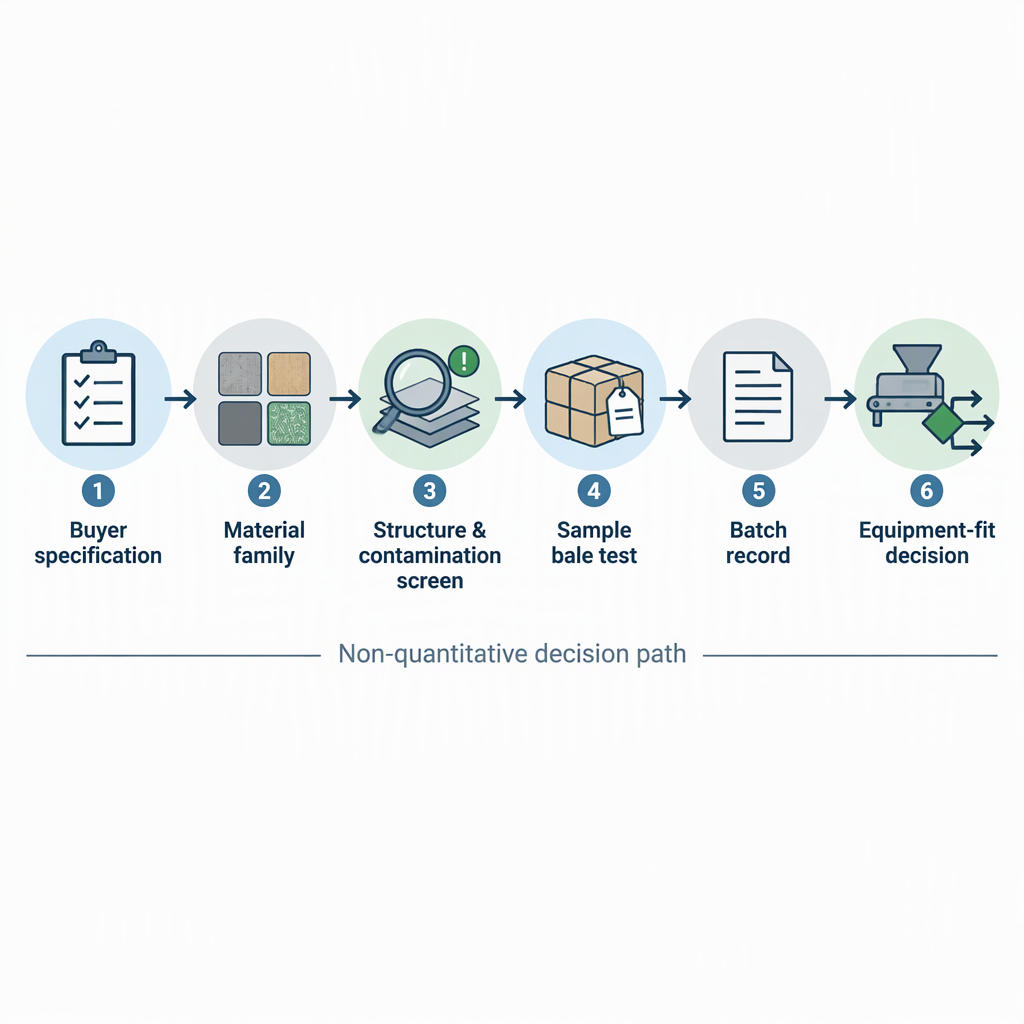
Batch records help prove that today’s bale was made from the same sorting logic as the sample bale that the buyer accepted.
| Record field | Why it matters | Action if it changes |
|---|---|---|
| Incoming source and date | Links bale quality back to the feedstock lot. | Mark the bale as a new lot and compare with the approved sample. |
| Commodity or grade target | Shows which buyer commodity specification the bale was sorted toward. | Get buyer confirmation before mixing with a different target grade. |
| Buyer or model-spec reference | Shows whether the bale was sorted to the buyer’s own rules, a model benchmark, or both. | Update the sorting checklist when the buyer changes its receiving rule. |
| Rejected materials | Shows whether contamination is stable, increasing or coming from one supplier. | Adjust upstream receiving, storage or supplier feedback. |
The best equipment discussion starts after sorting has defined material, throughput, bale specification, site constraints and safety controls.
| Sorting result | Selection question for suppliers | Document to request |
|---|---|---|
| Dominant material family | Which baler category is intended for this stream? | Model datasheet and allowable material description |
| Required bale specification | Can the proposed configuration make the required bale size and tie format with this feedstock? | Written specification comparison and sample-test plan |
| Expected daily or shift volume | Does the loading, compression and discharge workflow match the site’s throughput target? | Throughput assumptions and duty-cycle explanation |
| Site and safety constraints | Where will sorting, staging, guarding, operator access and bale storage fit? | Layout drawing, operating manual and maintenance access requirements |
HUANHONG’s website presents broad equipment categories such as scrap metal balers, waste paper balers, horizontal balers, vertical balers, scrap metal shears, metal briquetting machines and metal shredder lines; use those categories as a starting menu, then request model-specific proof for the exact feedstock and bale requirement.
Sort first, test second and select equipment third: that sequence gives procurement a clearer basis for comparing suppliers and gives operations a repeatable way to protect bale consistency.
A practical baler material sorting program does not need to start with complex automation. It starts with a written buyer specification, labelled streams, structure-aware sorting, sample bales, batch records and a supplier discussion tied to the actual material. When the buyer changes the specification or the incoming feedstock changes, repeat the sample test before treating the new stream as routine.
The most useful sorting questions focus on buyer acceptance, repeatability and the information needed before selecting a baler.
No. APR states that its model bale specifications are not intended to replace individual buyer specifications, so use them as a benchmark and confirm the buyer’s current receiving rules.
No single rule should be assumed for every stream because commodity specifications cover different processed scrap categories, and buyers may set different acceptance requirements.
Keep the feedstock source, date, target specification, rejected materials, sample-bale notes, buyer feedback and any setting or staging changes that could affect the next batch.
APR lists separate plastic bale groups such as PET, HDPE, PP, mixed rigids, film and polystyrene, so plastic sorting should follow the material family and product group the buyer recognizes.
Run a new sample bale when the buyer specification, incoming supplier, material family, structure mix, contamination screen, bale size target or equipment setup changes.
Sorting converts a broad requirement into concrete selection inputs: material family, stream condition, throughput target, bale specification, site layout, safety controls and the sample-test record suppliers must respond to.


