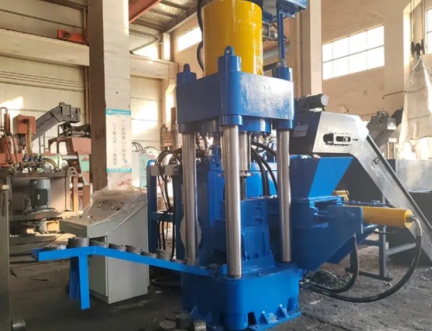
In metalworking and recycling operations, scrap does not always come in large, easy-to-handle pieces. Much of the daily waste generated in machining shops, foundries, and fabrication plants appears in the form of loose chips, turnings, swarf, borings, or fine metal residues. These materials may look small, but they can create big handling problems. They spread easily, take up storage space, make workshops harder to keep organized, and often require extra effort during collection, transport, and recycling. This is exactly why the Metal Briquetting Machine has become such a practical solution in modern scrap handling. It turns loose metal waste into compact briquettes, helping businesses manage production scrap in a cleaner, more efficient way.
From our perspective as a hydraulic equipment manufacturer, one of the first questions buyers ask is not only how the machine works, but what materials it can actually process. This is the right question, because a metal briquetting machine performs best when the material type matches the machine’s design and the production environment. In real industrial use, these machines are valued because they can handle a wide range of metal residues from daily manufacturing operations and convert them into denser, more manageable output.
1 What Does a Metal Briquetting Machine Process
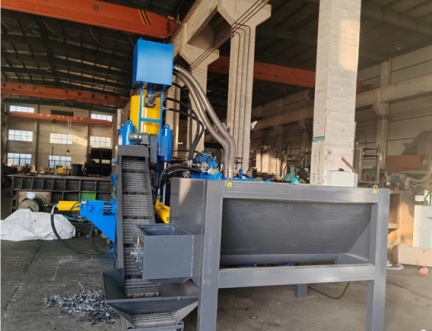
A Metal Briquetting Machine is designed to process loose metal waste generated during production and machining. Its primary function is to compress this loose material into dense briquettes.
The machine is most commonly used for:
These materials usually come from:
Instead of storing this scrap in loose piles or bins, the machine compacts it into a more uniform form that is easier to handle.
In simple terms, the machine processes loose and small-form metal scrap, not large structural metal pieces.
2 The Most Common Materials a Metal Briquetting Machine Can Handle
A Metal Briquetting Machine is commonly used for many types of ferrous and non-ferrous metal residues. The most suitable materials are usually those produced in chip, shaving, or turning form during industrial processing.
Common processable materials include:
These materials are often compacted because they are:
loose and difficult to store efficiently
generated in regular quantities
easier to recycle after densification
more manageable when turned into briquettes
Common metal categories
Material Category | Typical Scrap Form | Common Briquetting Suitability |
Steel | chips, turnings, borings | very common |
Cast iron | chips, fines | very common |
Stainless steel | turnings, chips | common |
Aluminum | chips, shavings | very common |
Copper | chips, cuttings | common |
Brass | turnings, shavings | common |
This is why metal briquetting machines are widely used in production environments where these metals are processed daily.
3 Ferrous Metals Commonly Processed
In many factories, the largest share of briquetting material comes from ferrous metal waste, especially from machining operations.
A Steel chips and turnings
Mild steel and carbon steel chips are among the most common materials processed by a Metal Briquetting Machine. They are frequently produced in machine shops and often accumulate in large quantities.
B Cast iron chips
Cast iron is another highly common briquetting material. Since cast iron machining can generate significant chip volume, briquetting helps reduce storage bulk and create a more manageable output.
C Stainless steel scrap in small form
Stainless steel turnings and chips are also commonly processed, especially in workshops that machine stainless parts for industrial or commercial use.
Why ferrous scrap is a good fit
Ferrous machining waste often appears in repeatable forms, which makes it easier to:
This repeatability is one reason why briquetting machines are so useful in metalworking production environments.
4 Non-Ferrous Metals Commonly Processed
A Metal Briquetting Machine is also widely used for non-ferrous metal residues, especially where machining creates valuable loose scrap that should be handled efficiently.
A Aluminum chips and shavings
Aluminum is one of the most common non-ferrous materials processed by briquetting machines. Since aluminum chips are lightweight and bulky when loose, compressing them can greatly improve storage and transport efficiency.
B Copper chips
Copper machining scrap is often compacted because loose copper chips can be difficult to manage in open bins, and denser output is easier to store and sort.
C Brass turnings
Brass residues from machining operations are also frequently briquetted, especially in facilities producing fittings, valves, or precision components.
D Bronze and other similar alloys
Where production generates recurring chip waste from bronze or similar alloys, briquetting can help improve handling in the same way as with copper and brass.
Why non-ferrous scrap is often ideal
Non-ferrous metals can create high-volume, low-density chip waste. Briquetting helps make these materials:
5 What Scrap Form Is Most Suitable
The machine is best suited for certain forms of metal scrap, not just certain metal types.
The most suitable forms include:
Scrap forms overview
Scrap Form | Why It Works Well |
Chips | easy to compact from loose bulk |
Turnings | common machining waste form |
Swarf | suitable for volume reduction |
Borings | dense small scrap that benefits from consolidation |
Fine particles | easier to manage after briquetting |
The machine works best when the material is already in a fragmented or loose state. It is designed for residue compaction, not primary cutting or shredding of large parts.
6 What Materials Are Usually Less Suitable
Although a Metal Briquetting Machine can process many kinds of metal residues, it is not intended for every scrap form.
Materials that are usually less suitable include:
These materials are not ideal because the machine is designed to compress small loose scrap, not to break or cut large pieces. If the scrap is too large or too rigid, it typically needs pre-processing before briquetting.
Less suitable input types
Material Type | Why It Is Less Suitable |
Large solid pieces | not designed for direct compression |
Structural scrap | requires size reduction first |
Thick plates | poor fit for briquetting chamber |
Mixed bulky assemblies | uneven feeding and poor compaction |
High non-metal contamination | reduces briquette consistency |
This is why material preparation and sorting are important before the briquetting process begins.
7 Why Material Cleanliness Matters
A Metal Briquetting Machine performs better when the material is relatively clean and suitable for compaction. That does not mean the scrap must be perfectly clean, but excessive contamination can affect output quality and process stability.
Common issues with poor input quality
mixed debris in the scrap stream
excessive dirt or non-metal waste
packaging materials mixed with chips
large foreign objects in chip bins
Why cleaner input helps
Cleaner metal waste usually allows:
more consistent briquette shape
smoother machine operation
more predictable batch handling
easier scrap classification after compaction
In practical workshop use, better material discipline often leads to better briquetting results.
Final Thoughts
So, what materials can a Metal Briquetting Machine process? In practical industrial use, it is mainly designed to process loose metal waste such as steel chips, cast iron chips, stainless steel turnings, aluminum shavings, copper chips, brass turnings, and other compactable machining residues. It performs best with fragmented, small-form metal scrap that can be compressed into dense briquettes for easier storage, transport, and recycling. Large solid pieces and bulky scrap assemblies are generally less suitable because the machine is built for compaction, not primary cutting or size reduction. Understanding this material range helps businesses choose the right equipment and get better results from everyday scrap handling.
At Jiangsu Huanhong Hydraulic Co., Ltd., we understand that the value of a briquetting solution depends on how well it matches the real scrap generated in production. A well-chosen Metal Briquetting Machine can help improve workshop organization, material recovery, and day-to-day scrap management efficiency. If you are looking for practical hydraulic equipment for metal waste processing and want to better handle machining residues in your facility, you are welcome to learn more from Jiangsu Huanhong Hydraulic Co., Ltd.
FAQ
1) What materials can a metal briquetting machine commonly process?
A Metal Briquetting Machine commonly processes steel, cast iron, stainless steel, aluminum, copper, brass, and other loose metal residues in chip, turning, or swarf form.
2) Can a metal briquetting machine process aluminum chips?
Yes. Aluminum chips and shavings are among the most common materials processed because they are lightweight and benefit greatly from volume reduction.
3) Is a metal briquetting machine suitable for large solid scrap?
No. A Metal Briquetting Machine is generally intended for loose and small-form metal waste, not large solid pieces or oversized structural scrap.
4) Why is scrap form important for metal briquetting?
Scrap form matters because the machine is designed to compact loose materials such as chips, borings, and turnings. These forms compress more efficiently into stable briquettes.


