In scrap metal recycling, one of the most important tasks is not simply collecting metal—it is preparing that metal so it can be handled, sorted, transported, and processed efficiently. Scrap rarely arrives in neat, uniform sizes. It often comes as long bars, pipes, rebar, light structural steel, mixed offcuts, wire bundles, and irregular production leftovers. Before those materials can move smoothly into baling, shredding, smelting, or resale channels, they usually need to be cut down into manageable lengths. That is where the Alligator Shear plays a very practical role.
An alligator shear is valued in scrap yards because it provides a straightforward way to cut long or awkward metal pieces into shorter sections with controlled force. Its jaw-style cutting motion makes it especially useful for repetitive cutting work, pre-processing tasks, and volume reduction in daily recycling operations. From our perspective, it is one of the most practical machines for yards and recycling businesses that need to improve material handling without moving immediately to larger and more complex cutting systems. At Jiangsu Huanhong Hydraulic Co., Ltd., we understand that buyers are not just asking what an alligator shear is—they are asking what work it actually helps them do.
What is an alligator shear?
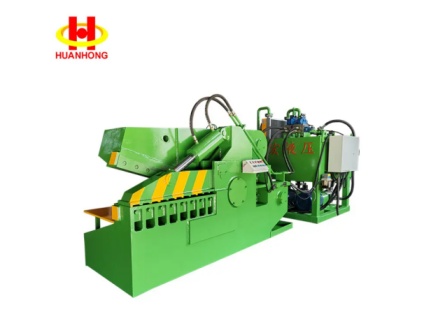
An alligator shear is a cutting machine with a hinged upper blade and a fixed lower blade. As the upper jaw closes, it cuts through metal in a motion that resembles an alligator’s mouth, which is where the name comes from. In scrap recycling, this machine is primarily used for cutting metal stock into shorter, more manageable pieces.
Unlike some large scrap processing systems that are designed for bulk compression or fragmentation, an alligator shear is typically chosen for:
direct cutting of long scrap
controlled length reduction
repetitive shop or yard processing
preparation of material before secondary handling
Its working style makes it especially practical for operations that need consistent cutting of bars, rods, pipe, sections, and production scrap.
The main purpose: cutting long scrap into manageable lengths
The most common use of an alligator shear in scrap metal recycling is length reduction. Long scrap pieces are harder to stack, sort, transport, and feed into downstream equipment. By cutting them into shorter lengths, the recycling process becomes more efficient.
Why this matters in daily operations
shorter pieces are easier to handle manually or mechanically
storage becomes more organized
truck loading and container filling become more efficient
material can be prepared to fit furnace, baler, or resale requirements
mixed long scrap becomes easier to separate by type
This is one of the biggest reasons alligator shears remain common in scrap yards: they solve a simple but constant problem.
Common materials an alligator shear is used to cut
In practical recycling work, an alligator shear is commonly used for a wide range of ferrous and some non-ferrous scrap materials, depending on machine size and cutting force.
Typical materials include
The exact range depends on the model, blade length, and hydraulic force, but in general, alligator shears are best suited for long, narrow, or section-type scrap rather than oversized heavy block material.
Table: Common scrap types handled by an alligator shear
Material Type | Why It Fits Alligator Shear Processing |
Rebar | Long, rigid, easy to section into transportable lengths |
Steel rods and bars | Frequently needs size reduction before handling |
Pipe and tube | Easier to store and sort after cutting |
Angle and light sections | Common in demolition and fabrication scrap |
Wire bundles | Can be shortened for easier packing and sorting |
Factory offcuts | Repetitive shapes make cutting efficient |
How alligator shears improve scrap handling efficiency
A major benefit of an alligator shear is that it improves the workflow before final recycling. In many yards, the challenge is not only cutting metal, but preparing it to move smoothly through the rest of the system.
An alligator shear helps by:
reducing oversized scrap into workable pieces
improving sorting by creating consistent lengths
making stacking and bundling easier
reducing wasted storage space
allowing faster preparation for resale or furnace charging
In other words, the machine is often used as a pre-processing tool that makes the rest of the recycling chain more efficient.
It helps reduce scrap volume in a practical way
An alligator shear is not a baler, but it still helps reduce practical volume by shortening awkward material. Long bars and pipes may not be large in weight, but they consume a lot of space in a yard and are difficult to load efficiently.
By cutting them down:
For scrap operations with limited floor space, this can make a noticeable difference.
It supports better scrap sorting and grading
In scrap recycling, value often depends on how well material is sorted. Mixed long scrap can be difficult to grade if it is tangled, piled, or oversized. An alligator shear helps by making materials easier to separate into more organized categories.
This supports:
easier identification of metal type
cleaner sorting by shape or specification
better preparation for customer-specific shipment sizes
improved yard organization
When scrap becomes easier to sort, it often becomes easier to manage and market.
Common use cases in recycling yards and metal processing shops
Alligator shears are used in many places beyond large open scrap yards. They are also practical in smaller metal handling operations where regular cutting is needed.
Typical application settings
scrap metal recycling yards
metal collection and sorting centers
fabrication workshops handling offcuts
demolition scrap processing areas
warehouse scrap preparation zones
small and medium-size metal recovery businesses
Because the machine is relatively direct in function, it works well in operations that need dependable cutting without the complexity of larger full-line systems.
Why alligator shears are useful for repetitive cutting work
Another important use of an alligator shear is repetitive length cutting. In many recycling environments, similar materials arrive in recurring sizes—such as rods, pipes, or production scrap. Instead of using manual cutting methods or slower alternatives, the alligator shear allows operators to process repeated cuts with better consistency.
Practical benefits of repetitive cutting
more uniform output lengths
faster processing of repeated stock forms
less effort compared with manual methods
more stable preparation for loading or bundling
This makes it especially useful in yards where certain scrap types appear regularly.
Alligator shear vs other scrap processing equipment
An alligator shear is not designed to do every job in a scrap yard. Its value becomes clearer when compared with other equipment types.
Table: Alligator shear compared with other scrap machines
Equipment Type | Main Function | Best Use Case |
Alligator Shear | Cuts long scrap into shorter lengths | Bars, rebar, pipe, light sections |
Baler | Compresses loose scrap into dense bundles | Loose metal, cans, light mixed scrap |
Shredder | Breaks scrap into smaller fragmented pieces | High-volume mixed scrap processing |
Guillotine shear | Heavy-duty straight cutting of larger sections | Larger or heavier bulk cutting jobs |
This comparison shows that an alligator shear is especially strong in pre-cutting and preparation, not bulk shredding or compression.
Key advantages in scrap metal recycling
For many recyclers, the alligator shear remains a practical machine because it combines simple function with useful daily value.
Main advantages include
straightforward cutting of long scrap
improved material handling
better storage efficiency
easier loading and transport preparation
more organized sorting
useful pre-processing before downstream recycling steps
These advantages make it a common choice for yards that need a reliable cutting machine for routine scrap preparation.
Closing thoughts
So, what is an Alligator Shear used for in scrap metal recycling? In practical terms, it is mainly used to cut long scrap metal into shorter, more manageable lengths so the material can be sorted, stored, transported, and processed more efficiently. It is especially useful for rebar, rods, pipe, light structural sections, wire bundles, and factory offcuts. By improving scrap handling, reducing awkward volume, and supporting more organized processing, the alligator shear remains one of the most practical cutting machines in many recycling operations.
At Jiangsu Huanhong Hydraulic Co., Ltd., we understand that scrap recycling businesses need equipment that is reliable, practical, and suited to real daily workloads. If you are evaluating an Alligator Shear for scrap handling, metal cutting, or recycling preparation, you are welcome to learn more through Jiangsu Huanhong Hydraulic Co., Ltd. and explore the right equipment solution for your operation.
FAQ
1) What is an alligator shear mainly used for in scrap recycling?
An alligator shear is mainly used to cut long scrap metal such as rebar, rods, pipe, and light sections into shorter lengths for easier handling, sorting, storage, and transport.
2) What materials can an alligator shear usually cut?
It is commonly used for rebar, steel bars, pipe, tubing, angle steel, wire bundles, and factory offcuts, depending on the machine’s size and cutting capacity.
3) Why is an alligator shear useful in a scrap yard?
It helps reduce oversized scrap into manageable pieces, improves loading and storage efficiency, and makes sorting and downstream processing easier.
4) Is an alligator shear the same as a shredder or baler?
No. An alligator shear is mainly for cutting long materials into shorter sections, while a shredder breaks scrap into smaller fragments and a baler compresses loose scrap into dense bundles.


