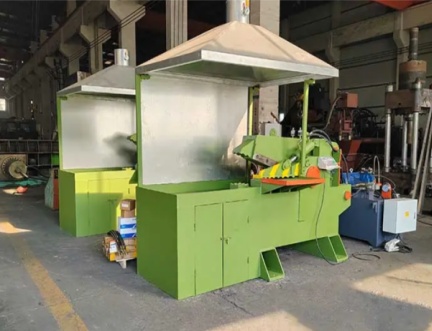
When customers ask us how an Alligator Shear works, they are usually trying to answer a practical production question: Is this the right machine for cutting long, awkward metal stock like rebar and pipe quickly, safely, and consistently? In many workshops, scrapyards, and metal processing lines, the challenge is not only cutting metal—it is cutting it into manageable lengths without wasting time, overcomplicating the workflow, or using equipment that is too expensive or too large for the job. That is exactly why the alligator shear remains such a practical machine.
At Jiangsu Huanhong Hydraulic Co., Ltd., we see the alligator shear as a highly efficient solution for straight, repeatable cutting of long metal materials. Industry references consistently describe hydraulic alligator shears as machines with a fixed lower jaw and a hinged upper jaw, driven by a hydraulic cylinder, and commonly used for cutting scrap metal such as rebar, pipes, rounds, and other long stock.
What is an Alligator Shear?
An Alligator Shear is a hydraulic metal cutting machine that uses two blades arranged like a jaw:
The machine gets its name from the way the cutting head opens and closes like an alligator’s mouth. Industry descriptions commonly note that the upper jaw pivots downward while the lower jaw stays fixed, creating a shearing action similar to a powered scissor cut.
This design is especially useful for:
Unlike larger guillotine or gantry systems, an alligator shear is often chosen for simpler, faster batch cutting of smaller or medium-size material lengths.
How does an Alligator Shear work?
The working principle is straightforward, which is one reason the machine is so widely used.
1 Material is placed in the jaw opening
The operator feeds the rebar, pipe, or other stock into the cutting mouth. The opening can be adjusted or used according to the size of the material and the machine’s cutting range.
2 The material is held in position
Many hydraulic alligator shears use a hold-down or pressure device to stabilize the material before the main cut. Product descriptions commonly mention mechanical or hydraulic hold-down systems to keep scrap from shifting during cutting.
3 Hydraulic power drives the upper blade
A hydraulic pump sends oil pressure to the cutting cylinder, which drives the upper jaw downward. This creates strong, concentrated shearing force at the blade edge. Industry references describe the system as using hydraulic cylinders to power the moving blade through the cut.
4 The upper blade shears through the material
As the upper blade closes against the fixed lower blade, the metal is cut by shear force rather than by sawing or grinding. This makes the process fast and efficient for straight cuts.
5 The blade returns and the next cut begins
After the cut is completed, the jaw opens again, allowing the operator to feed the next section. Some models include automatic return or adjustable stroke features to improve cycle efficiency.
In simple terms, the machine turns hydraulic pressure into a powerful jaw-closing motion that slices through metal stock cleanly and repeatedly.
Why is an Alligator Shear good for rebar?
Rebar is one of the materials most commonly associated with alligator shears, and for good reason.
1 Rebar is long, straight, and repetitive to cut
A lot of rebar cutting work involves reducing long bars into shorter, workable lengths. The alligator shear is ideal for this because it is built for repeated straight cuts in long stock.
2 It handles solid round material efficiently
Many alligator shear specifications list mild steel round cutting capacity, which aligns closely with common rebar-style cutting tasks. For example, some industrial models list cutting capacities in the approximate 44–52 mm diameter mild steel round range, depending on machine size and force.
3 It is faster than many manual or lower-efficiency methods
For repetitive rebar cutting, the alligator shear offers a simple feed-and-cut rhythm. This makes it practical for scrap processing, jobshop preparation, and batch size reduction.
4 It reduces handling difficulty
Once long rebar is cut into shorter sections, it becomes easier to:
This is one reason industry sources frequently mention rebar specifically when describing alligator shear applications.
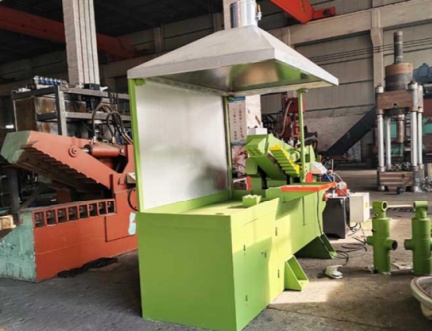
Why is an Alligator Shear good for pipe?
Pipe is another material where alligator shears offer very practical value.
1 Pipe can be awkward to store and transport when left long
Long steel pipe takes up space, is harder to bundle, and is less convenient to feed into downstream recycling or handling systems. An alligator shear quickly reduces it into shorter, more manageable sections.
2 The jaw-style cut is well suited for tube and pipe stock
Because the machine grips and cuts with concentrated force at the jaw, it is effective for many standard pipe-cutting tasks in scrap and stock reduction work.
3 It supports fast batch processing
If a workshop or yard regularly cuts similar diameters of pipe, an alligator shear can streamline the workflow significantly. Operators can repeat the same cut pattern with less setup than many other cutting methods.
4 It is practical for mixed scrap work
In many real facilities, rebar and pipe are not processed separately all day long. A major advantage of the alligator shear is that it can handle both types of material in the same work area, supporting flexible scrap processing.
Industry references commonly describe alligator shears as suitable for cutting pipes, rebar, and other long scrap metals, which is exactly why they are widely used in recycling and metal preparation environments.
Main advantages of an Alligator Shear for rebar and pipe
1 Fast, direct cutting
The machine is built for quick on/off cutting cycles rather than slow material removal. That makes it efficient for repetitive stock reduction.
2 Good for long materials
Long bars and tubes are where alligator shears are especially practical. They are designed around feeding material into a jaw, not loading bulky mixed scrap into a compression chamber.
3 Simple operating logic
Compared with more complex systems, the alligator shear is relatively straightforward to understand:
4 Lower complexity than larger heavy shears
For many small and medium operations, an alligator shear is more accessible and practical than a large gantry shear.
5 Strong hydraulic cutting force
Industrial models commonly use hydraulic force measured in tens or even over one hundred tons, depending on model size, which is why they can handle demanding metal-cutting tasks effectively.
Table: Why rebar and pipe are good matches for an Alligator Shear
Material | Why It Fits the Machine | Main Benefit |
Rebar | solid, straight, repetitive stock | fast batch cutting into shorter lengths |
Steel pipe | long tubular material, awkward when uncut | easier handling, bundling, and transport |
Round bar | consistent shape and repeatable feed | efficient production rhythm |
Mixed long scrap | similar feeding method across materials | flexible daily workflow |
When an Alligator Shear is the best choice
An alligator shear is often the best choice when:
you regularly cut long metal stock
your main materials include rebar and pipe
you need repeatable straight cuts
you want a machine that is practical for small to medium operations
your goal is size reduction for handling, storage, or recycling
It is especially useful in:
scrap yards
metal recycling stations
rebar preparation areas
fabrication workshops
stock reduction lines
Conclusion
So, how does an Alligator Shear work, and why is it good for rebar and pipe? It works by using hydraulic power to drive a hinged upper blade down against a fixed lower blade, creating a strong shearing cut. This jaw-style cutting action is especially effective for long, repetitive metal stock such as rebar, steel pipe, and round bar. Industry sources consistently describe alligator shears as practical machines for cutting scrap metal, rebar, and pipe quickly into shorter, more manageable sections.
For operations that need fast, repeatable, straightforward cutting of long metal materials, the alligator shear remains one of the most practical machine choices available.
To learn more about alligator shear solutions and machine options for rebar, pipe, and scrap metal processing, you are welcome to contact Jiangsu Huanhong Hydraulic Co., Ltd. for more information.
FAQ
1) What does an Alligator Shear mainly cut?
It is commonly used to cut long metal stock such as rebar, steel pipe, round bar, and other scrap metal pieces.
2) Why is an Alligator Shear called that?
The name comes from its jaw-like cutting head, where a hinged upper blade closes against a fixed lower blade like an alligator’s mouth.
3) Is an Alligator Shear good for rebar?
Yes. It is widely used for cutting rebar because rebar is straight, repetitive stock that suits the machine’s hydraulic jaw-style cutting method.
4) Can an Alligator Shear cut pipe efficiently?
Yes. It is commonly used for pipe because it can quickly reduce long pipe lengths into shorter sections that are easier to handle, store, and recycle.


