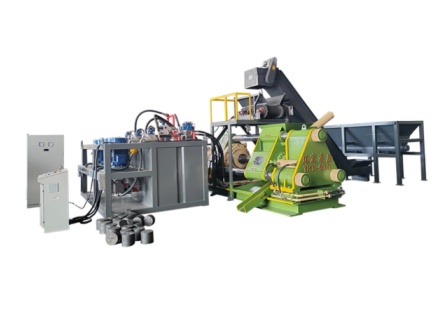
As the demand for efficient recycling and waste management solutions in manufacturing industries increases, horizontal hydraulic metal chip briquetting machines have become a key tool for compacting metal scrap. These machines not only improve the recycling process but also help reduce waste disposal costs, improve metal recovery rates, and enhance the overall efficiency of manufacturing operations.
From our experience working closely with manufacturers who generate a high volume of metal chips—such as those involved in machining, stamping, and casting—one of the most common questions is: What types of metal chips work best with horizontal hydraulic briquetting machines? In this article, we will explore the different types of metal chips that are most compatible with these machines, how the briquetting process works, and the factors you should consider when choosing a horizontal hydraulic briquetting machine for your needs.
Understanding Horizontal Hydraulic Briquetting Machines
Horizontal hydraulic briquetting machines are designed to compress metal scrap into dense, compact briquettes. The key advantage of these machines is their ability to handle a wide variety of metal chips, regardless of size or shape, turning them into valuable, easy-to-handle products. These briquettes can then be reused as raw material in foundries, smelting processes, or for resale as scrap metal.
The machine operates by applying high-pressure hydraulic force to a hopper filled with metal chips, forcing them into a die where they are compressed into a solid shape. The briquettes produced are dense, uniform in size, and easy to transport and store.
What Types of Metal Chips Are Suitable for Briquetting?
The success of the briquetting process depends heavily on the type of metal chips being used. Some metals are more suitable for compacting due to their density, cohesiveness, and overall physical properties. Understanding these factors can help you choose the right machine and ensure the briquetting process is as efficient as possible.
1. Ferrous Metal Chips
Ferrous metals, particularly steel and cast iron, are among the most common types of chips processed in horizontal hydraulic briquetting machines. These materials tend to be dense and cohesive, which makes them ideal for compaction.
Key Characteristics:
High density: Ferrous metal chips, such as steel or iron, have a high density, allowing them to form compact, stable briquettes.
Excellent recyclability: Briquetted steel and iron can be easily reused in smelting operations to produce high-quality metal products.
Common Applications: Machining, welding, and cutting operations generate ferrous chips that are ideal for briquetting.
2. Non-Ferrous Metal Chips
Non-ferrous metals such as aluminum, copper, brass, and bronze also work well with briquetting machines. While they may not be as dense as ferrous metals, they are still highly suitable for compacting, especially when the correct machine settings are used.
Key Characteristics:
Lightweight and malleable: Non-ferrous metals are typically lighter and more malleable than ferrous metals, which means they can form more easily into briquettes.
Corrosion resistance: Many non-ferrous metals, such as aluminum, are highly resistant to corrosion, making them valuable in the recycling market.
Common Applications: Automotive parts, electronics, and construction materials often generate non-ferrous metal chips that can be efficiently compacted.
3. Mixed Metal Chips
Many manufacturing facilities generate mixed metal chips, which consist of a combination of ferrous and non-ferrous metals. These mixed chips can also be processed in horizontal hydraulic briquetting machines, although there are a few considerations.
Key Characteristics:
Variable density: Mixed metal chips may have varying densities depending on the proportions of ferrous and non-ferrous metals.
Higher processing cost: Briquetting mixed chips may require more energy and a higher-pressure setting due to the differences in metal properties.
Common Applications: Facilities that produce a variety of metal components, such as automotive parts and household appliances, often generate mixed metal chips.
4. Small Metal Chips and Shavings
Small, fine metal chips and shavings—often produced in grinding, milling, and turning operations—are typically challenging to manage due to their small size and low cohesiveness. However, horizontal hydraulic briquetting machines can compact these small chips into solid briquettes, which helps improve their recyclability and reduce waste disposal costs.
Key Characteristics:
Low cohesiveness: Small metal chips tend to lack the natural cohesiveness that larger chips have, making them more difficult to compact.
Enhanced scrap value: Briquetting small chips increases their density and scrap value, which is particularly beneficial for facilities looking to maximize their return on metal scrap.
Common Applications: Small metal chips are often produced during the precision machining of components in industries such as aerospace, automotive, and electronics.
Types of Metal Chips and Their Suitability for Briquetting
Metal Type | Characteristics | Common Applications | Challenges in Briquetting |
Ferrous Metal Chips | High density, excellent recyclability, good cohesiveness for compacting. | Machining, welding, cutting operations. | Can be heavy and difficult to handle in bulk. |
Non-Ferrous Metal Chips | Lightweight, malleable, corrosion-resistant. | Automotive parts, electronics, construction materials. | Less dense, requiring adjustments to compaction force. |
Mixed Metal Chips | Variable density depending on metal composition. | Automotive parts, household appliances. | Requires more energy and higher pressure settings. |
Small Metal Chips & Shavings | Low cohesiveness, small size, challenging to compact. | Precision machining (aerospace, automotive, electronics). | Difficult to compact, but increases scrap value when compacted. |
How to Choose the Right Horizontal Hydraulic Briquetting Machine
When selecting a horizontal hydraulic briquetting machine for your facility, it’s essential to evaluate several factors that influence the machine's performance, efficiency, and suitability for your production requirements. Here’s a deeper look into the key factors to consider when making your decision:
1. Chip Type and Composition
The type of metal chips you process will have a significant impact on the machine's effectiveness. Different types of metal chips, such as ferrous and non-ferrous materials, require varying compaction pressures. If your facility generates a mixture of metal types, such as steel, aluminum, or copper, it’s crucial to choose a briquetting machine that can handle mixed compositions effectively. Machines that offer adjustable pressure settings or multi-functional capabilities can accommodate diverse materials, providing better compaction and higher-quality briquettes.
2. Briquette Density Requirements
The density of the briquettes is a critical factor in the recycling process. High-density briquettes are easier to transport, store, and recycle, especially in applications like smelting or resale. Depending on your intended application, you may need a machine capable of producing briquettes with specific density requirements. For example, higher-density briquettes may be necessary for industries like foundries or metal recycling plants where compactness and uniformity are essential.
3. Production Volume
Production volume plays a key role in machine selection. If your facility operates at a high output, you’ll need a machine with a larger feed capacity and a faster compaction cycle to keep up with production demands. Machines designed for higher throughput can significantly boost efficiency, ensuring continuous operation and minimizing downtime.
4. Machine Features
Modern briquetting machines come with a range of advanced features that enhance efficiency and usability. Automatic feeding systems, hydraulic pressure adjustments, and digital control systems can all improve machine performance, making it easier to operate, monitor, and maintain. When choosing a machine, consider the features that align with your operational needs.
5. Maintenance and Support
Lastly, the reliability of the supplier and the machine's maintenance requirements should be taken into account. A supplier with a robust support system, easy access to spare parts, and responsive customer service can help minimize downtime. Machines that require less frequent maintenance and are designed for durability can reduce long-term operational costs. It’s crucial to choose a supplier who offers comprehensive after-sales support, including troubleshooting, spare parts availability, and maintenance services.
Final Thoughts
Horizontal hydraulic metal chip briquetting machines are invaluable tools for improving the efficiency of metal recycling processes. By compacting metal chips into dense briquettes, manufacturers can reduce waste, improve recyclability, and enhance overall system efficiency. Understanding which types of metal chips work best with these machines—and how to select the right machine for your needs—is essential for optimizing your operations.
From our experience as a manufacturer of hydraulic machinery, we understand that selecting the right briquetting machine can have a significant impact on your bottom line. If you are interested in learning more about horizontal hydraulic briquetting machines and how they can benefit your operations, you can contact Jiangsu Huanhong Hydraulic Co., Ltd.. Their expertise in hydraulic machinery and briquetting solutions will help you make the best choice for your metal recycling needs.
FAQ
1. What types of metal chips can be processed in a horizontal hydraulic briquetting machine?
Ferrous and non-ferrous metal chips, including steel, aluminum, brass, and copper, can be effectively processed in a horizontal hydraulic briquetting machine.
2. Can small metal chips be briquetted in a horizontal hydraulic machine?
Yes, small metal chips and shavings can be compacted into briquettes, improving their value for recycling and reducing waste.
3. How does the briquette density affect the recycling process?
Higher-density briquettes are more suitable for smelting and can be sold at a higher price, making them more valuable in the recycling process.
4. What are the key advantages of horizontal hydraulic briquetting machines?
Horizontal hydraulic briquetting machines provide high-pressure compaction, flexibility in processing various metal types, and low maintenance requirements.


