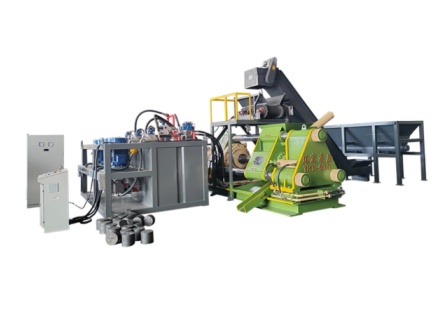
In today’s manufacturing industry, metalworking processes such as machining and cutting generate significant amounts of metal chips and scraps. Managing these metal waste materials can be costly and inefficient, often taking up valuable floor space and requiring complicated handling. For manufacturers aiming to streamline their waste management systems and reduce operational costs, a horizontal hydraulic metal chip briquetting machine offers a highly effective solution.
At Jiangsu Huanhong Hydraulic Co., Ltd., we specialize in providing high-performance horizontal hydraulic metal chip briquetting machines. These machines play a key role in improving waste handling by efficiently compacting metal chips into briquettes, making them easier to handle, transport, and recycle. In this article, we’ll explore how horizontal hydraulic briquetting machines work, the key benefits they offer, and how they help reduce waste handling costs in manufacturing environments.
1 The Problem with Metal Chip Waste in Manufacturing
In most manufacturing operations, metalworking processes like machining, cutting, and grinding generate substantial amounts of metal waste. These chips and scraps accumulate quickly and require proper handling to ensure that they don’t create inefficiencies, unsafe working conditions, or environmental concerns.
Challenges associated with metal chip waste:
Space utilization: Loose metal chips take up significant floor space, which could be better utilized for production.
Handling difficulties: Storing and transporting loose metal chips are difficult and often involve costly labor.
Environmental impact: Improper disposal of metal chips can result in environmental pollution, leading to potential regulatory fines.
Recycling inefficiencies: Recycling loose chips may not be cost-effective due to the complexities of sorting and compacting them.
This is where horizontal hydraulic metal chip briquetting machines come in, offering a practical solution to overcome these challenges by compacting metal chips into dense, easily manageable briquettes.
2 How Horizontal Hydraulic Metal Chip Briquetting Machines Work
A horizontal hydraulic metal chip briquetting machine is designed to compress metal chips and shavings into compact, high-density briquettes using hydraulic pressure. These machines are built to handle a wide range of metal types, such as steel, aluminum, brass, and copper. By converting loose metal chips into solid, manageable briquettes, manufacturers can reduce waste, enhance recycling efficiency, and improve operational workflow.
How the Briquetting Process Works:
Feeding: Metal chips are fed into the hopper of the briquetting machine. The chips are carefully prepared for compression. These chips may come from various manufacturing processes like machining, cutting, grinding, and turning.
Compression: Once the chips are in the hopper, they move into a specially designed chamber where they undergo hydraulic compression. Hydraulic pressure is applied to push the chips together, forcing the loose material to form a dense shape.
Briquette Formation: As the pressure builds, the metal chips start to fuse together. The result is a solid, cylindrical briquette. This briquette is much easier to handle and store compared to loose chips.
Discharge: After the briquette has formed, the machine discharges it, allowing it to be collected for further processing, storage, or recycling.
Customization: Horizontal hydraulic briquetting machines can be tailored to handle specific metal types and chip sizes, ensuring efficient and reliable performance for different production environments.
This process of transforming metal waste into high-density briquettes helps optimize recycling efforts and makes waste disposal more manageable.
3 Key Benefits of Horizontal Hydraulic Metal Chip Briquetting Machines
The use of horizontal hydraulic metal chip briquetting machines offers numerous advantages that help manufacturers reduce waste handling costs while improving operational efficiency. Let’s explore the key benefits:
A Cost Reduction in Waste Handling
By converting loose metal chips into compact briquettes, manufacturers can significantly cut costs associated with waste handling. The briquettes are easier to store, transport, and recycle than loose chips, leading to:
Reduced storage space: Briquettes take up less space, freeing up valuable floor space in factories.
Lower labor costs: Handling and transporting briquettes is easier and less labor-intensive than dealing with loose chips.
Simplified recycling: With briquettes, metal recycling becomes more efficient, as they are easier to load and unload during the recycling process.
Ultimately, compacting metal waste into briquettes can drastically reduce the time and money spent on handling and storing waste materials.
B Improved Recycling Efficiency
Once metal chips are compacted into briquettes, they are much easier to recycle. Briquetted metal can be sold or sent directly to recycling centers without the challenges associated with loose metal chips. The improved handling makes the entire recycling process more efficient, enabling manufacturers to recover valuable metals such as steel, aluminum, and copper.
Some key advantages include:
Easier transportation: Briquettes can be transported more easily, reducing handling costs.
Streamlined recycling: Recycling centers can process briquettes more effectively, leading to faster turnaround times and higher recovery rates.
Increased material recovery: Briquettes maximize the value of recycled materials, further reducing production costs.
As a result, businesses can recover more material from their waste and reduce the need for new raw materials, contributing to both cost savings and sustainability.
C Space-Saving and Reduced Environmental Impact
Metal chips, especially when accumulated in large quantities, can take up significant space. By converting these chips into compact briquettes, manufacturers can optimize floor space, creating a cleaner and more organized production environment. This compacting process has additional environmental benefits:
Cleaner work environment: Reduces clutter and the potential for accidents in the workplace.
Compliance with waste disposal regulations: Some industries require manufacturers to dispose of metal waste in a controlled manner. Briquetting can help meet regulatory requirements for safe waste handling.
Minimized environmental impact: Briquetting metal chips ensures that they are not left to accumulate in landfills, reducing the environmental footprint of industrial waste.
By optimizing both the use of space and the disposal process, manufacturers can also contribute to a cleaner and safer work environment.
D Enhanced Safety and Reduced Workplace Hazards
Loose metal chips can create a variety of safety hazards, including:
Tripping hazards: Dispersed chips can make factory floors slippery, leading to accidents.
Sharp edges: Metal chips have sharp edges that pose a risk to employees, increasing the likelihood of injury.
Fire risk: In some cases, metal chips can become a fire hazard if not stored properly.
By using a horizontal hydraulic briquetting machine to compact metal chips, manufacturers can significantly reduce these risks. Briquettes are safer to handle, store, and transport, providing a more secure and organized workplace.
E Customizable Designs and Flexibility
Horizontal hydraulic briquetting machines are not one-size-fits-all solutions. These machines can be customized to fit a variety of metal types, chip sizes, and production requirements. This flexibility makes them suitable for diverse industries, including:
Manufacturers can choose from different machine sizes, capacities, and briquette types to meet specific operational needs. The ability to tailor the machine to particular requirements enhances production flexibility and ensures that the briquetting process is optimized for the factory environment.
Types of Metal Chips and Their Suitability for Briquetting
Metal Type | Characteristics | Common Applications | Challenges in Briquetting |
Ferrous Metal Chips | High density, excellent recyclability, good cohesiveness for compacting. | Machining, welding, cutting operations. | Can be heavy and difficult to handle in bulk. |
Non-Ferrous Metal Chips | Lightweight, malleable, corrosion-resistant. | Automotive parts, electronics, construction materials. | Less dense, requiring adjustments to compaction force. |
Mixed Metal Chips | Variable density depending on metal composition. | Automotive parts, household appliances. | Requires more energy and higher pressure settings. |
Small Metal Chips & Shavings | Low cohesiveness, small size, challenging to compact. | Precision machining (aerospace, automotive, electronics). | Difficult to compact, but increases scrap value when compacted. |
5 Conclusion: Transforming Waste Management with Horizontal Hydraulic Briquetting Machines
Horizontal hydraulic metal chip briquetting machines are an essential tool for manufacturers looking to reduce waste handling costs, improve recycling efficiency, and create a safer work environment. By compacting metal chips into dense, manageable briquettes, companies can save space, reduce labor costs, and enhance their sustainability efforts.
At Jiangsu Huanhong Hydraulic Co., Ltd., we specialize in providing high-performance hydraulic briquetting machines designed to meet the specific needs of various industries. Whether you are looking to improve your waste management processes or streamline your recycling efforts, our machines provide a reliable solution that will help your business achieve its goals. For more information about our briquetting machines and to explore how they can benefit your company, please contact us today.
FAQ
What are the main benefits of using a horizontal hydraulic metal chip briquetting machine?
The main benefits include cost reduction, improved recycling efficiency, space-saving, enhanced safety, and a cleaner work environment.
How do horizontal hydraulic briquetting machines help with recycling?
These machines compress metal chips into compact briquettes, making them easier to transport, store, and recycle, which improves recycling efficiency.
Can horizontal hydraulic briquetting machines be customized for different types of metal chips?
Yes, these machines are versatile and can be customized to handle various types of metal chips, including aluminum, steel, copper, and more.
What industries benefit most from horizontal hydraulic briquetting machines?
Industries such as automotive, aerospace, and manufacturing, which generate a large amount of metal waste, can benefit significantly from using briquetting machines.


